Textiles and Apparel in Turkiye: Import Compliance, HS Codes and Document Control is a document-control guide for buyers who want to turn open public sources into practical import questions. It does not give legal, customs or regulatory advice; it shows how to build a cleaner buyer file before a Turkish supplier quote becomes a purchase order.
For Textiles and Apparel, import compliance should not be left until the shipment is ready. The buyer should check product family, HS research, destination-market requirements, origin evidence, label and instruction rules, restricted-party screening, payment identity and document ownership while the supplier is still being evaluated.
Build the compliance file before price ranking
The first Textiles and Apparel control is simple: separate public-source research from supplier-specific proof for knitwear and woven apparel and workwear and uniforms. Open sources can frame the question, but they do not approve a supplier. A supplier becomes more credible when it can connect the exact quoted product to the current documents, responsible people and shipment route.
| Control layer | Open-source or supplier input | Buyer decision rule |
|---|---|---|
| HS and customs research | 6109 knit shirts where applicable; 6203 or 6204 woven apparel families where applicable | Use WITS, UN Comtrade and destination customs tools for research, then confirm classification with the importer, broker or qualified adviser. |
| Origin and export file | commercial invoice, packing list, origin evidence and transport document sample | Ask for sample documents with sensitive values removed before deposit or production release. |
| Product and label rules | REACH or restricted-substance review where relevant; OEKO-TEX or similar scope where available; care label accuracy | Translate public guidance into supplier questions; do not let a certificate name replace scope review. |
| Restricted-party and responsibility check | legal entity confirmation, bank-detail verification and screening workflow | Screen the contracting party, payment route and named intermediaries before payment milestones. |
| Shipment and receiving documents | Incoterm and named place; carton and pallet specification; HS code and origin file; insurance and warehouse receiving rule | Make the document owner visible so shipment delays do not become an after-the-fact blame exercise. |
HS-code research without overclaiming
For Textiles and Apparel, HS code research is useful for landed-cost estimates around knitwear and woven apparel and workwear and uniforms, market comparison and customs planning, but a public trade database is not a final classification ruling. Use WITS, UN Comtrade, Access2Markets and destination customs references to understand likely chapters and questions. Then validate the final classification with the importer, broker or qualified customs owner.
- Map the quoted Textiles and Apparel knitwear and woven apparel to possible HS families before asking for a final price.
- Ask whether Textiles and Apparel knitwear and woven apparel material, function, kit composition, packaging or intended use changes classification.
- Keep Textiles and Apparel supplier catalog language separate from broker-validated customs language.
- Record who approved the final Textiles and Apparel classification and when it should be reviewed again.
- If the Textiles and Apparel order includes workwear and uniforms or denim and casualwear, check whether each SKU needs its own classification note.
Destination-market questions
Destination-market rules for Textiles and Apparel often affect REACH or restricted-substance review where relevant, OEKO-TEX or similar scope where available, care label accuracy. The supplier should not be asked a vague "are you compliant?" question. The buyer should ask narrower questions that can be answered with documents tied to knitwear and woven apparel and the actual shipment route.
| Question area | Ask the supplier | Evidence to keep |
|---|---|---|
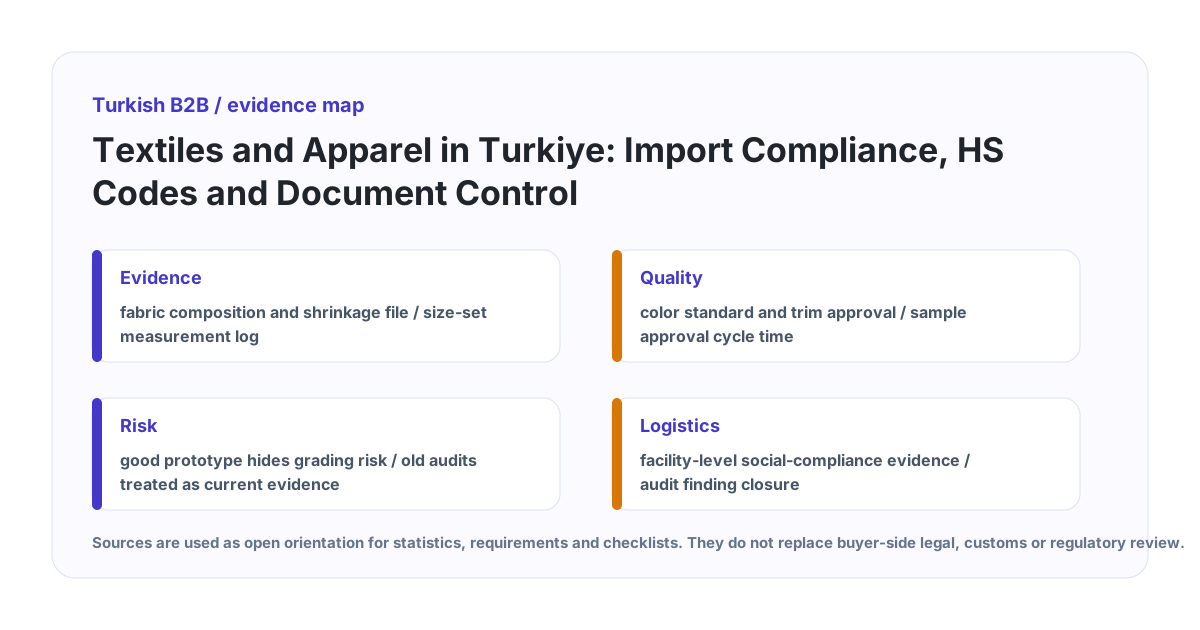
| Product scope | Which exact Textiles and Apparel product, model, formula, material, batch or service scope is being quoted? | fabric composition and shrinkage file; size-set measurement log; color standard and trim approval |
| Market access | Which destination-market rule affects knitwear and woven apparel? | REACH or restricted-substance review where relevant; OEKO-TEX or similar scope where available; care label accuracy |
| Labels and claims | Which label, instruction, warning, claim or language field can stop shipment or receiving? | barcode and label match; carton drop or compression logic where relevant; humidity and route protection |
| Document owner | Who signs, updates and corrects each document before shipment? | pre-production sample approval; shade or finish lot control; AQL or receiving rule |
| Payment identity | Which legal entity, bank account and export party will be used? | company and bank-detail verification; deposit tied to approved sample and document file; balance payment tied to inspection or shipment milestone |
Origin, documents and screening
For Textiles and Apparel, origin evidence, commercial invoice data, packing lists, transport documents, insurance assumptions and restricted-party screening should be handled before payment milestones. This is especially important when a trader, exporter, free-zone operator, subcontractor or service partner sits between the buyer and the production activity behind knitwear and woven apparel or workwear and uniforms.
- Incoterm and named place
- carton and pallet specification
- HS code and origin file
- insurance and warehouse receiving rule
- company and bank-detail verification
- deposit tied to approved sample and document file
- balance payment tied to inspection or shipment milestone
- change-order approval before extra cost
- contracting party and bank-detail verification
- restricted-party screening for named commercial parties
- origin statement aligned with the transformed product and shipment route
Textiles and Apparel specific buyer notes
These Textiles and Apparel notes are intentionally sector-specific so the sourcing file does not collapse into a generic Turkey supplier template.
- Separate fabric approval, fit approval, size-set approval and bulk release; one good prototype does not prove grading or shrinkage control.
- Facility-level social-compliance evidence matters because subcontracting can change the real risk profile.
- Color standards, trim cards and care labels should be retained as the order reference.
Stop, clarify or proceed
A Textiles and Apparel compliance file is useful only if it changes decisions. The buyer should write a stop/go rule before suppliers are compared, because missing documents around good prototype hides grading risk and old audits treated as current evidence are easiest to ignore when one quote looks cheaper.
| Decision | Signal | Action |
|---|---|---|
| Proceed | fabric composition and shrinkage file; size-set measurement log; color standard and trim approval; facility-level social-compliance evidence | The supplier can connect the exact product, site, document owner and destination market. |
| Clarify | REACH or restricted-substance review where relevant; OEKO-TEX or similar scope where available; care label accuracy; audit finding closure | A useful claim exists, but scope, model, batch, label, HS code or responsible person is not yet clear. |
| Hold | good prototype hides grading risk; old audits treated as current evidence; bulk fabric differs from approved sample; the fit sample is approved but grading is not measured | Do not rank price or pay deposit until the missing compliance point is closed. |
| Escalate | customs classification, regulated product route, sanctions/restricted-party signal or conflicting origin statement | Move the question to the importer, broker, legal adviser or qualified regulatory owner. |
How this improves the RFQ
The best Textiles and Apparel RFQ does not ask suppliers to guess what the buyer forgot to define. It names the product family, destination, evidence requested, classification owner, shipment document owner and correction process. That makes answers comparable and reduces the risk of a surprise at customs, receiving or payment release.
Copy-ready RFQ skeleton
Subject: RFQ - Textiles and Apparel / target market / expected annual volume
Product scope: Textiles and Apparel knitwear and woven apparel, workwear and uniforms, denim and casualwear; SKU, drawing, formula, material, grade, size, color, finish, artwork, destination market and usage conditions.
Evidence requested: fabric composition and shrinkage file; size-set measurement log; color standard and trim approval; facility-level social-compliance evidence; fabric composition file; shrinkage and colorfastness test.
Commercial fields: Textiles and Apparel sample cost, MOQ driver, price breaks, Incoterm, lead time, tooling or artwork cost, payment milestone and validity date.
Decision rule: Textiles and Apparel quotes without fabric composition and shrinkage file and size-set measurement log, production-site clarity and logistics assumptions are held for clarification before price comparison.
Next step
Use this page with Textiles and Apparel in Turkiye: B2B Potential Map and Textiles and Apparel in Turkiye: Supplier Shortlist and Verification. Together they keep the buyer from treating open data, supplier claims and commercial quotes as the same kind of evidence.
Buyer quality gate before action
Before using this Textiles and Apparel article as an RFQ or supplier file, check that every public-source note has been converted into a buyer decision, not copied as filler.
| Step | Evidence before price | Release rule |
|---|---|---|
| What buyers should define | Textiles and Apparel: knitwear and woven apparel; workwear and uniforms; denim and casualwear; private-label collections | Start with product family, destination market, volume band, required evidence, packaging, Incoterm, payment milestones and order-release rule before comparing prices. |
| Evidence before price | fabric composition and shrinkage file; size-set measurement log; color standard and trim approval; facility-level social-compliance evidence; fabric composition file | Request product-specific evidence: production site, specification, sample approval, quality records, packaging plan, export document example and corrective-action owner. |
| Buyer risks to control | good prototype hides grading risk; old audits treated as current evidence; bulk fabric differs from approved sample; the fit sample is approved but grading is not measured; facility audit belongs to a different production site | Control vague specification, hidden production responsibility, sample-to-bulk drift, weak packaging, missing documents and unverified payment details. |
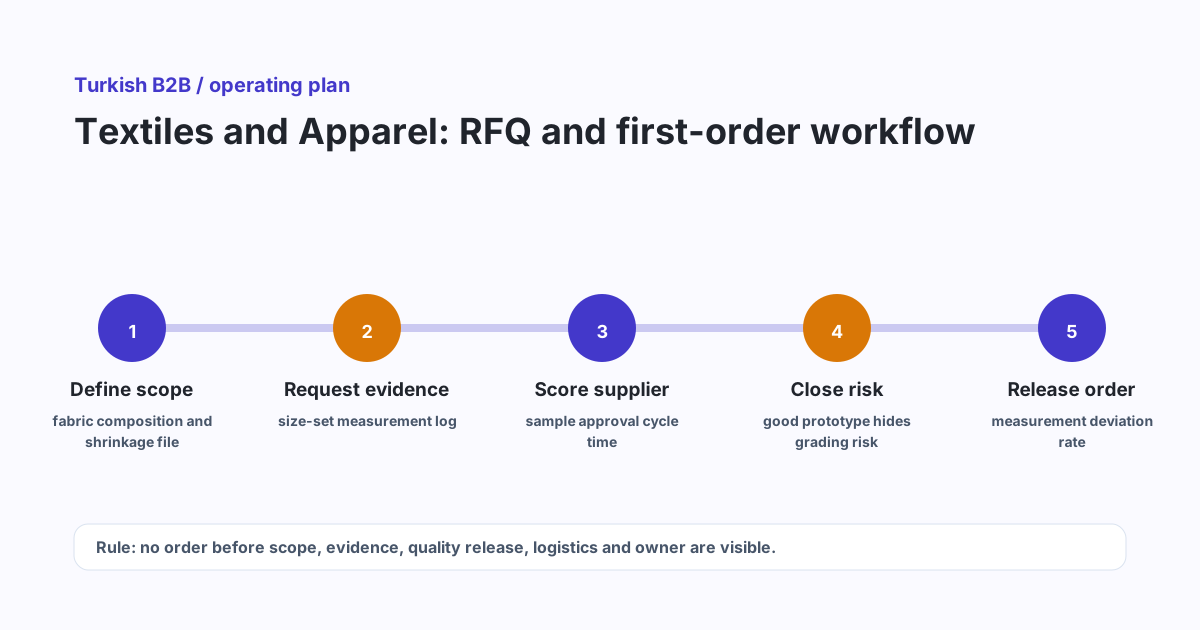
| RFQ and first-order workflow | For Textiles and Apparel, frame the first order as a controlled import compliance pilot: start with knitwear and woven apparel, define release evidence, keep logistics assumptions visible and review sample approval cycle time before repeat volume. | Rule: no order before scope, evidence, quality release, logistics and owner are visible. |
Textiles and Apparel supplier action
Use the guide as the buyer file, then request a shortlist or submit an RFQ with the evidence already defined: fabric composition and shrinkage file, size-set measurement log, color standard and trim approval.
FAQ
Can open trade data confirm the correct HS code for Textiles and Apparel?
No. Open trade data is useful for Textiles and Apparel research and market comparison, but final classification should be validated by the importer, broker or qualified customs owner for the exact knitwear and woven apparel, material, function and destination.
Which import documents should be requested before ordering Textiles and Apparel?
Start with fabric composition and shrinkage file, size-set measurement log, color standard and trim approval, facility-level social-compliance evidence, fabric composition file, shrinkage and colorfastness test. Add destination-market requirements once the product scope and route are known.
How should buyers check supplier compliance claims?
Ask for Textiles and Apparel scope. A claim should be linked to fabric composition and shrinkage file, size-set measurement log, color standard and trim approval or the shipment route. Broad statements should stay in clarification.
When should a buyer stop the compliance process?
Hold the Textiles and Apparel process when HS code, origin, certificate scope, restricted-party screening, payment identity or REACH or restricted-substance review where relevant and OEKO-TEX or similar scope where available are unclear enough to affect landed cost or legal responsibility.
Related buyer paths across the network
Official and open sources
Textiles and Apparel in Turkiye: Import Compliance, HS Codes and Document Control is original. It does not copy competitor websites, closed market reports or supplier-directory prose. The sources below are used as official or open references for Textiles and Apparel interpretation and checklist design.
For the import compliance angle, these links support national context, product-requirement thinking and verification workflow design. They do not replace buyer-side legal, customs or regulatory advice for a live Textiles and Apparel order.
- U.S. Department of Labor - Comply ChainU.S. federal public information for labor-risk and due-diligence workflow framing.
- NIST Manufacturing Extension PartnershipU.S. federal public information for manufacturing capability and process-improvement framing.
- GOV.UK - Product safety advice for businessesOpen Government Licence public-sector guidance for product-safety workflow design.
- World Bank Enterprise SurveysPublic/open-data reference for business-environment and firm-level questions.
- Uludag Exporters AssociationsExporter-association public information used for Marmara/Bursa-oriented sector and export-channel context.
- Aegean Exporters AssociationsExporter-association public information used for Aegean-region export-channel and sector context.
- TOBB - Industrial Capacity Report StatisticsOfficial Statistics Program reference for industry capacity-report statistics and production-base interpretation.
- Turkiye Exporters Assembly - export figures and exporter association contextExporter-organization public information used for sectoral export-channel and association-context reading.
- European Commission - Access2MarketsOfficial EU market-access and product-requirement reference.
Related sector reading
- Textiles and Apparel in Turkiye: B2B Potential Map
- Textiles and Apparel in Turkiye: Supplier Shortlist and Verification
- Textiles and Apparel in Turkiye: RFQ, Quality and Logistics Plan
- Textiles and Apparel: Supplier Regions, Chambers and Export Channels
- Textiles and Apparel Product Families: knitwear and woven apparel, workwear and uniforms
- Textiles and Apparel in Turkiye: Landed Cost, MOQ and Negotiation Playbook