Construction Materials in Turkiye: Landed Cost, MOQ and Negotiation Playbook is a commercial control article for buyers who want to compare Turkish supplier quotes without being misled by unit price alone. It uses open logistics, trade-data and business-environment sources as context, then turns the decision into a practical landed-cost and negotiation file.
For Construction Materials, the cheapest first quote is rarely the safest quote. MOQ, setup cost, inspection, packaging, Incoterm, payment terms, correction ownership, document readiness and repeat-order lead time all affect the real cost of working with a supplier.
What belongs in landed cost
For Construction Materials, landed cost should be built before final supplier ranking. The buyer can start with supplier unit price, but the decision should include logistics assumptions, customs data quality, document ownership, inspection cost, packaging risk, payment exposure and the cost of delay when shade or finish approval or breakage allowance rule forces correction.
| Cost layer | What to ask | Why it changes the decision |
|---|---|---|
| Unit price | tiles and sanitaryware; stone and marble | Compare only after specification, sample rule and document expectations are identical. |
| MOQ and setup | Project materials need MOQ by batch, shade, crate, container mix and delivery phase. Ask how replacement material will match the original lot if the project runs long. | Separate MOQ driven by material, tooling, artwork, batch size, carton mix or inspection workload. |
| Quality release | shade or finish approval; breakage allowance rule; project lot reservation; site delivery phasing | A low price is weak if rework, inspection and deviation ownership are not priced into the operating plan. |
| Packing and logistics | barcode and label match; carton drop or compression logic where relevant; humidity and route protection | Route damage, pallet format, label errors and receiving exceptions can erase the apparent savings. |
| Payment and change orders | company and bank-detail verification; deposit tied to approved sample and document file; balance payment tied to inspection or shipment milestone; change-order approval before extra cost | Tie payment to objective milestones and require written approval for scope changes. |
MOQ pressure and quote comparability
MOQ for Construction Materials is not only a number. It may reflect tiles and sanitaryware, stone and marble, raw material batches, machine setup, tooling, artwork, color lots, packaging print runs, container fill, inspection time or supplier cash-flow pressure. A buyer should ask why the MOQ exists before negotiating it down.
| MOQ driver | Buyer question | Negotiation option |
|---|---|---|
| Material or component batch | Which material, component or input sets the minimum for tiles and sanitaryware? | Pilot with fewer variants, not weaker evidence. |
| Tooling, mold, artwork or setup | Which setup cost is one-time and which repeats? | Separate sample, tooling, print and production milestones. |
| Packaging and carton mix | How do barcode and label match and carton drop or compression logic where relevant affect MOQ? | Reduce assortment complexity before asking for a lower minimum. |
| Inspection and documentation effort | Which records are needed for standard and test report scope, project quantity and delivery phasing, pallet and handling plan? | Keep evidence requirements fixed and adjust order scope instead. |
| Freight and consolidation | Which Incoterm, named place and container assumption is used? | Compare landed scenarios, not isolated ex-works prices. |
Negotiation sequence
Strong negotiation in Construction Materials is not pressure for a discount; it is removal of ambiguity around standard and test report scope, project quantity and delivery phasing, pallet and handling plan. The buyer gets better leverage by making the file easier to quote and harder to misunderstand. A supplier that can answer a disciplined RFQ may deserve a higher unit price than a cheaper supplier with invisible risk.
| Stage | Buyer move | Commercial rule |
|---|---|---|
| Before price request | Define tiles and sanitaryware, target market, annual estimate and first-order scope. | Supplier quotes should answer the same file, not different assumptions. |
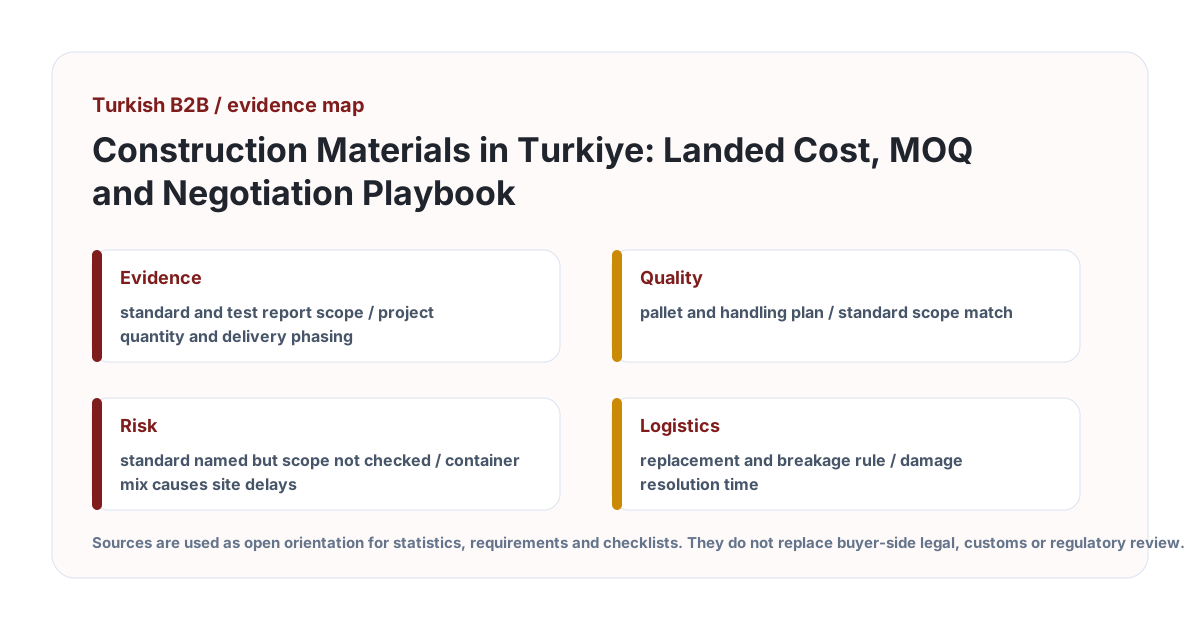
| Before shortlist | Request standard and test report scope; project quantity and delivery phasing; pallet and handling plan; replacement and breakage rule. | Evidence quality should decide who reaches final quotation. |
| Before deposit | Close standard named but scope not checked; container mix causes site delays; damage responsibility unclear. | Open risk belongs in a decision log, not in a hopeful purchase order. |
| Before repeat order | Review standard scope match; delivery phase adherence; damage resolution time. | Repeat volume should follow measured performance, not only a successful shipment. |
Payment milestones and risk sharing
Payment terms for Construction Materials should match evidence milestones. A deposit can be commercially normal, but it should follow approved specification, sample plan, document checklist and production schedule. Balance payment should be connected to shade or finish approval or breakage allowance rule, shipment document review or another objective acceptance point.
- company and bank-detail verification
- deposit tied to approved sample and document file
- balance payment tied to inspection or shipment milestone
- change-order approval before extra cost
Score the quote, not only the supplier
The same Construction Materials supplier can submit a strong quote for tiles and sanitaryware and a weak quote for another product family. Score the commercial offer by what it proves. If the quote hides assumptions, the buyer should move it into clarification rather than treating it as a valid price.
| Score area | Good answer | Weak answer |
|---|---|---|
| Specification | Quote references standard and test report scope; project quantity and delivery phasing; pallet and handling plan. | Quote repeats a category name without scope. |
| Incoterm and logistics | Incoterm and named place; carton and pallet specification; HS code and origin file | Named place, handover point or document owner is missing. |
| Quality release | shade or finish approval; breakage allowance rule; project lot reservation | Inspection is described as a final photo check only. |
| MOQ and lead time | Project materials need MOQ by batch, shade, crate, container mix and delivery phase. Ask how replacement material will match the original lot if the project runs long. | MOQ is stated without driver, variant rule or repeat-order timing. |
| Correction cost | standard scope match; delivery phase adherence; damage resolution time | No owner is named for deviation, claim or late document. |
First-order commercial test
The first Construction Materials order should test the economic model without expanding the SKU count too quickly. If the buyer wants long-term supply, the pilot should measure document first-pass quality, shipment readiness, claim response, packaging performance and whether repeat pricing remains stable after evidence requests around standard scope match and delivery phase adherence.
- Limit the pilot to the tiles and sanitaryware or highest-risk SKU family.
- Write acceptance around standard scope match, delivery phase adherence, damage resolution time.
- Record every Construction Materials clarification that changes price, lead time, MOQ or responsibility.
- Review Construction Materials landed cost after receiving, not only after booking freight.
- Use repeat volume only after the Construction Materials pilot proves standard scope match and delivery phase adherence and the review date is closed.
Next step
After the landed-cost file is built, connect it to Construction Materials in Turkiye: B2B Potential Map and Construction Materials in Turkiye: Supplier Shortlist and Verification. That keeps commercial negotiation aligned with supplier evidence, customs planning and first-order control.
Buyer quality gate before action
Before using this Construction Materials article as an RFQ or supplier file, check that every public-source note has been converted into a buyer decision, not copied as filler.
| Step | Evidence before price | Release rule |
|---|---|---|
| What buyers should define | Construction Materials: tiles and sanitaryware; stone and marble; doors and profiles; insulation and boards | Start with product family, destination market, volume band, required evidence, packaging, Incoterm, payment milestones and order-release rule before comparing prices. |
| Evidence before price | standard and test report scope; project quantity and delivery phasing; pallet and handling plan; replacement and breakage rule; standard scope map | Request product-specific evidence: production site, specification, sample approval, quality records, packaging plan, export document example and corrective-action owner. |
| Buyer risks to control | standard named but scope not checked; container mix causes site delays; damage responsibility unclear; the standard is named but the tested product is different; mixed containers are planned without site sequence | Control vague specification, hidden production responsibility, sample-to-bulk drift, weak packaging, missing documents and unverified payment details. |
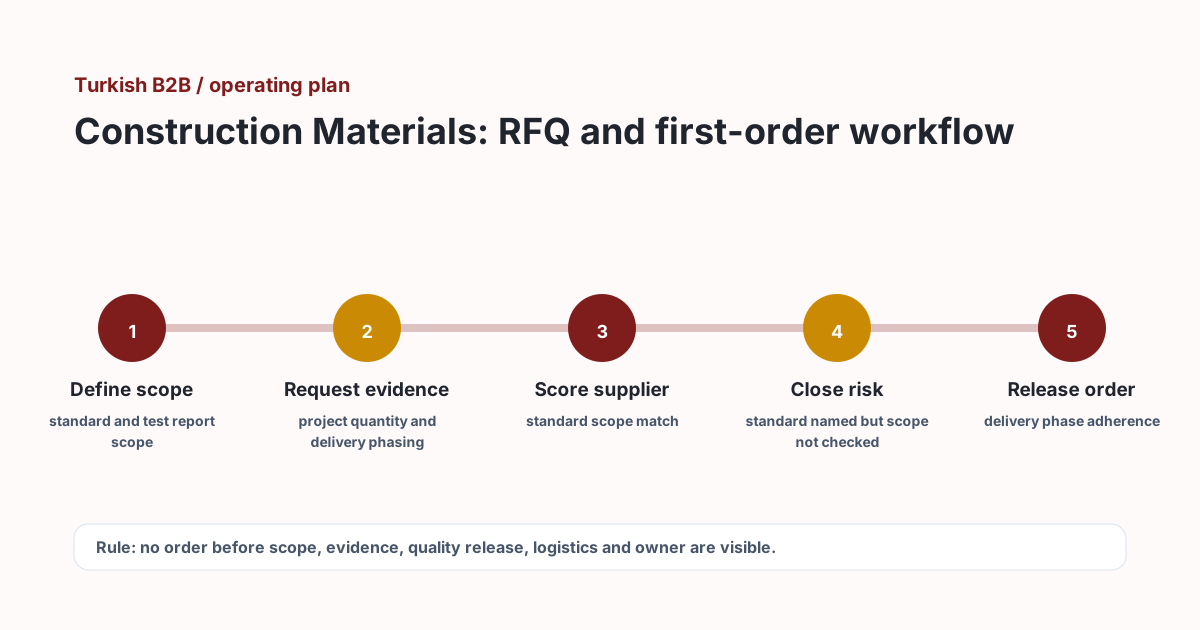
| RFQ and first-order workflow | For Construction Materials, frame the first order as a controlled landed cost and moq pilot: start with tiles and sanitaryware, define release evidence, keep logistics assumptions visible and review standard scope match before repeat volume. | Rule: no order before scope, evidence, quality release, logistics and owner are visible. |
Construction Materials supplier action
Use the guide as the buyer file, then request a shortlist or submit an RFQ with the evidence already defined: standard and test report scope, project quantity and delivery phasing, pallet and handling plan.
FAQ
Why is the lowest Construction Materials quote not always the best quote?
A low Construction Materials unit price can hide MOQ pressure, barcode and label match, carton drop or compression logic where relevant, unclear Incoterms, missing documents, inspection cost, payment exposure or correction delays. Compare landed cost and evidence, not price alone.
How should buyers negotiate MOQ with Turkish suppliers?
For Construction Materials, ask what drives the MOQ: tiles and sanitaryware, stone and marble, material batch, tooling, setup, artwork, packaging print, inspection effort or freight consolidation. Reduce scope or variants before reducing evidence requirements.
Which payment milestones reduce landed-cost risk?
Tie Construction Materials deposit and balance to objective evidence such as company and bank-detail verification, deposit tied to approved sample and document file, balance payment tied to inspection or shipment milestone. Avoid paying against vague progress updates.
What should be reviewed after the first order?
Review standard scope match, delivery phase adherence, damage resolution time plus document first-pass quality, actual landed cost, claim response and whether repeat pricing remained stable after clarification.
Related buyer paths across the network
Official and open sources
Construction Materials in Turkiye: Landed Cost, MOQ and Negotiation Playbook is original. It does not copy competitor websites, closed market reports or supplier-directory prose. The sources below are used as official or open references for Construction Materials interpretation and checklist design.
For the landed cost and moq angle, these links support national context, product-requirement thinking and verification workflow design. They do not replace buyer-side legal, customs or regulatory advice for a live Construction Materials order.
- TurkStat - Annual Industry and Service Statistics, 2024Official statistics used for production-value and sector-structure context.
- GOV.UK - Product safety advice for businessesOpen Government Licence public-sector guidance for product-safety workflow design.
- World Bank Logistics Performance IndexOpen/public logistics-performance reference for shipment and customs planning.
- GOV.UK - Import, export and customsOpen Government Licence public-sector guidance for customs and import planning.
- World Integrated Trade Solution - UN Comtrade accessOpen trade-data access point for HS-level import/export comparison.
- World Bank Enterprise SurveysPublic/open-data reference for business-environment and firm-level questions.
- Central Bank of the Republic of Turkiye - manufacturing capacity utilizationOfficial real-sector statistics reference for capacity-cycle and manufacturing operating context.
- World Bank Data Catalog - public licensesOpen-license reference for World Bank datasets, including CC BY style reuse where stated.
Related sector reading
- Construction Materials in Turkiye: B2B Potential Map
- Construction Materials in Turkiye: Supplier Shortlist and Verification
- Construction Materials in Turkiye: RFQ, Quality and Logistics Plan
- Construction Materials: Supplier Regions, Chambers and Export Channels
- Construction Materials Product Families: tiles and sanitaryware, stone and marble
- Construction Materials in Turkiye: Import Compliance, HS Codes and Document Control