Home Textiles in Turkiye: RFQ, Quality and Logistics Plan turns a sector opportunity into a working order file. The aim is to prevent the common failure where supplier search looks successful, but the RFQ, quality rules, payment terms and shipment assumptions remain scattered across emails.
For Home Textiles, the operating plan should connect product definition, evidence, quality release, commercial terms and logistics before the purchase order is issued. A controlled first order is slower than a rushed deposit, but it is much cheaper than a shipment that cannot be accepted on arrival.
RFQ file
The RFQ should state product scope, target market, expected quantity band, standards, tolerances, packaging, delivery term, required documents and the decision rule for missing evidence. A supplier should be able to answer without guessing what the buyer really means.
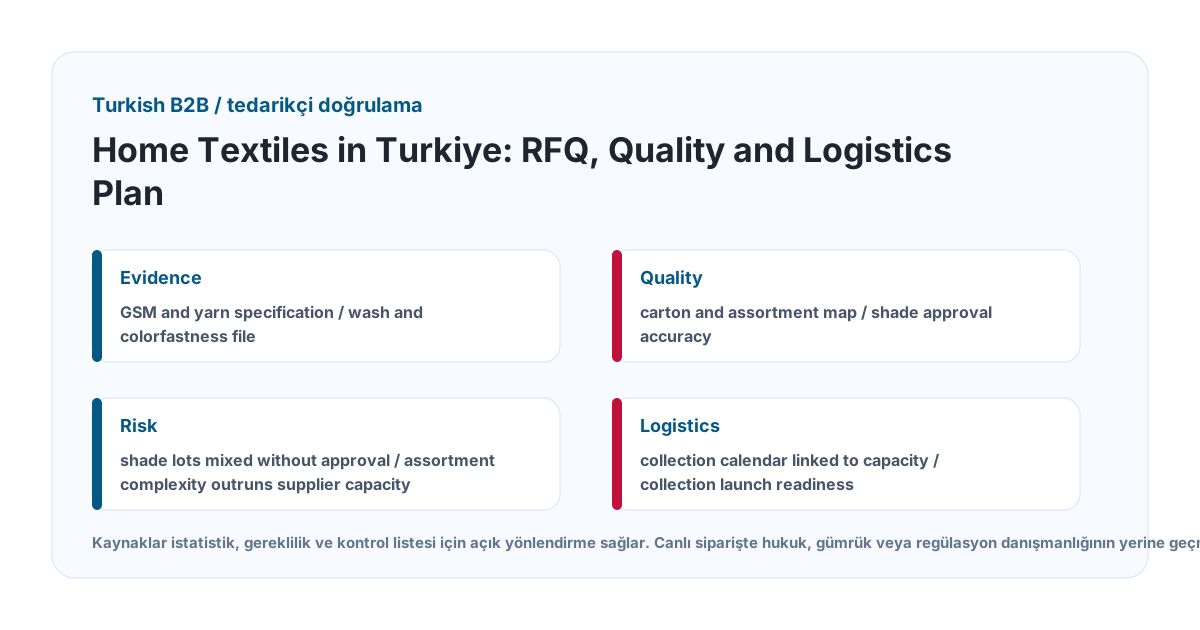
- GSM and yarn specification
- wash and colorfastness file
- carton and assortment map
- collection calendar linked to capacity
- Which production site will make this order?
- Which documents can be shared before sampling?
- Which parameter is controlled during production rather than only at final inspection?
- What changes require written buyer approval?
Copy-ready RFQ skeleton
Subject: RFQ - Home Textiles / target market / expected annual volume
Product scope: Home Textiles private-label collections, retail-ready assortments, hospitality products; SKU, drawing, formula, material, grade, size, color, finish, artwork, destination market and usage conditions.
Evidence requested: GSM and yarn specification; wash and colorfastness file; carton and assortment map; collection calendar linked to capacity; approved material board; measurement or size specification.
Commercial fields: Home Textiles sample cost, MOQ driver, price breaks, Incoterm, lead time, tooling or artwork cost, payment milestone and validity date.
Decision rule: Home Textiles quotes without GSM and yarn specification and wash and colorfastness file, production-site clarity and logistics assumptions are held for clarification before price comparison.
Specification checklist
Specifications fail when they are either too broad or too decorative. The useful file is operational: it tells the supplier how the product will be made, checked, packed, shipped and accepted. For this category, the buyer should lock these fields before comparing quotations.
| Specification field | What to write | Why it matters |
|---|---|---|
| Product definition | private-label collections; retail-ready assortments; hospitality products; seasonal ranges | Prevents suppliers from quoting adjacent but unsuitable products. |
| Evidence file | GSM and yarn specification; wash and colorfastness file; carton and assortment map; collection calendar linked to capacity | Makes the quote comparable and exposes weak candidates early. |
| Quality release | pre-production sample approval; shade or finish lot control; AQL or receiving rule; bulk-to-sample comparison | Defines what stops shipment and who approves deviations. |
| Packaging and labels | barcode and label match; carton drop or compression logic where relevant; humidity and route protection; retail versus transport packaging separated in the specification | Protects receiving, retail, warehouse and transport requirements. |
Quality-control plan
Quality should be released by records, not by optimism. The buyer should define what gets inspected, who approves deviations, what is sampled, which photos or tests are acceptable and which nonconformities stop shipment.
Useful operating metrics for this sector are shade approval accuracy, wash-test pass rate, collection launch readiness. These are not decorative KPIs; each one should have an owner, a review date and a visible action when it moves in the wrong direction.
| Control point | Owner | Release evidence |
|---|---|---|
| Before sample | Buyer and supplier commercial lead | approved material board; measurement or size specification; color standard |
| Before production | Supplier quality owner | golden sample retained by both sides; sample deviation log before purchase order; bulk-production approval tied to the same specification |
| During production | Supplier production and quality team | pre-production sample approval; shade or finish lot control; AQL or receiving rule |
| Before shipment | Buyer, inspector or authorized supplier quality owner | shade approval accuracy; wash-test pass rate; collection launch readiness |
Packaging, Incoterms and shipment documents
Delivery term, freight responsibility, customs data, HS classification, origin evidence, pallet plan, insurance and warehouse receiving rules should be read in the same table. A low unit price can become an expensive landed cost if these assumptions are separated.
| Operating layer | Minimum control | Buyer note |
|---|---|---|
| Incoterms | Named place, handover point and responsibility matrix | Do not compare EXW, FOB and DAP prices as if they are the same commercial offer. |
| Customs data | textile, furniture, footwear or accessory chapters must be checked by exact material and construction; mixed-material SKUs need classification before price comparison | Use open trade data for research, then validate classification through the importer or broker. |
| Origin and documents | Commercial invoice, packing list, origin evidence and transport document | Ask for sample documents with sensitive values removed before the first shipment. |
| Packing | barcode and label match; carton drop or compression logic where relevant; humidity and route protection | Warehouse receiving failures often begin as weak packing or label instructions. |
Inspection and payment risk control
Payment terms should follow evidence milestones. A deposit can be reasonable, but it should be tied to approved specification, sample, document file and production schedule. Balance payment should be tied to inspection, shipment document review or another objective release point.
- company and bank-detail verification
- deposit tied to approved sample and document file
- balance payment tied to inspection or shipment milestone
- change-order approval before extra cost
First 30 days
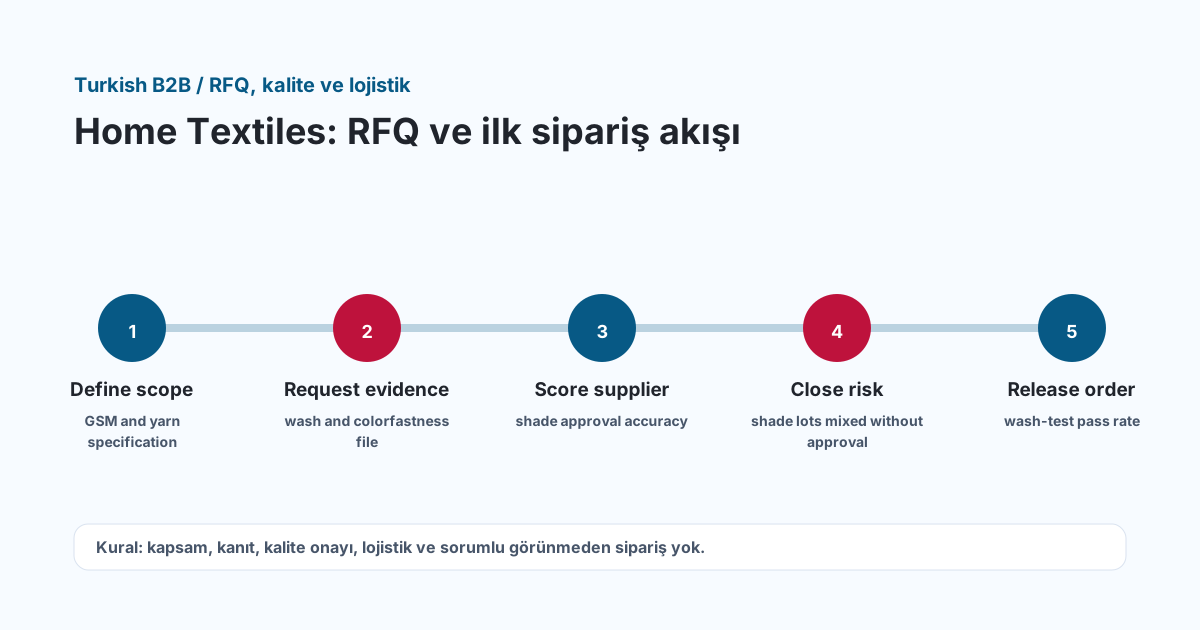
Week one: write the RFQ and evidence list. Week two: test the same request with two or three suppliers. Week three: compare answers using the same scorecard. Week four: close a decision note with open risks, responsible owners and the next review date. If a supplier cannot answer the narrow file, do not expand the conversation to annual volume.
For Home Textiles, frame the first order as a controlled rfq and operations pilot: start with private-label collections, define release evidence, keep logistics assumptions visible and review shade approval accuracy before repeat volume. Use Home Textiles in Turkiye: B2B Potential Map for the sector potential reading and Home Textiles in Turkiye: Supplier Shortlist and Verification for verification. The three pages together move from market interest to controlled execution.
Buyer quality gate before action
Before using this Home Textiles article as an RFQ or supplier file, check that every public-source note has been converted into a buyer decision, not copied as filler.
| Step | Evidence before price | Release rule |
|---|---|---|
| What buyers should define | Home Textiles: private-label collections; retail-ready assortments; hospitality products; seasonal ranges | Start with product family, destination market, volume band, required evidence, packaging, Incoterm, payment milestones and order-release rule before comparing prices. |
| Evidence before price | GSM and yarn specification; wash and colorfastness file; carton and assortment map; collection calendar linked to capacity; approved material board | Request product-specific evidence: production site, specification, sample approval, quality records, packaging plan, export document example and corrective-action owner. |
| Buyer risks to control | shade lots mixed without approval; assortment complexity outruns supplier capacity; packaging designed for showroom instead of transport; only a catalog is shared when production evidence is requested; the supplier avoids naming the production site | Control vague specification, hidden production responsibility, sample-to-bulk drift, weak packaging, missing documents and unverified payment details. |
| RFQ and first-order workflow | For Home Textiles, frame the first order as a controlled rfq and operations pilot: start with private-label collections, define release evidence, keep logistics assumptions visible and review shade approval accuracy before repeat volume. | Rule: no order before scope, evidence, quality release, logistics and owner are visible. |
Home Textiles supplier action
Use the guide as the buyer file, then request a shortlist or submit an RFQ with the evidence already defined: GSM and yarn specification, wash and colorfastness file, carton and assortment map.
FAQ
What should a Home Textiles RFQ include?
It should include product scope, target market, quantity band, evidence requested, quality-release rule, packaging, Incoterm, payment milestones and the decision rule for missing documents.
How should payment risk be controlled?
Tie deposit and balance milestones to evidence: approved sample, document file, production schedule, inspection release or shipment document review. Avoid paying against vague progress statements.
Which logistics checks matter before the first order?
Check Incoterm and named place, carton and pallet specification, HS code and origin file, insurance and warehouse receiving rule before purchase order. These details affect landed cost and receiving success.
What makes the first order safer?
Keep SKU scope narrow, write release criteria, retain the approved sample, confirm owner responsibilities and schedule a review before repeating volume.
Related buyer paths across the network
Official and open sources
Home Textiles in Turkiye: RFQ, Quality and Logistics Plan is original. It does not copy competitor websites, closed market reports or supplier-directory prose. The sources below are used as official or open references for Home Textiles interpretation and checklist design.
For the rfq and operations angle, these links support national context, product-requirement thinking and verification workflow design. They do not replace buyer-side legal, customs or regulatory advice for a live Home Textiles order.
- GOV.UK - Product safety advice for businessesOpen Government Licence public-sector guidance for product-safety workflow design.
- World Bank Enterprise SurveysPublic/open-data reference for business-environment and firm-level questions.
- World Integrated Trade Solution - UN Comtrade accessOpen trade-data access point for HS-level import/export comparison.
- TurkStat - Small and Medium Sized Enterprises Statistics, 2024Official statistics used for SME production, employment and export framing.
- World Bank Logistics Performance IndexOpen/public logistics-performance reference for shipment and customs planning.
- GOV.UK - Import, export and customsOpen Government Licence public-sector guidance for customs and import planning.
- NIST Manufacturing Extension PartnershipU.S. federal public information for manufacturing capability and process-improvement framing.
- European Commission - Access2MarketsOfficial EU market-access and product-requirement reference.
- Republic of Turkiye Ministry of Trade - Foreign Trade Data Bulletin, December 2025Official public bulletin used for national goods-export and trade-volume context.
Related sector reading
- Home Textiles in Turkiye: B2B Potential Map
- Home Textiles in Turkiye: Supplier Shortlist and Verification
- Home Textiles: Supplier Regions, Chambers and Export Channels
- Home Textiles Product Families: private-label collections, retail-ready assortments
- Home Textiles in Turkiye: Import Compliance, HS Codes and Document Control
- Home Textiles in Turkiye: Landed Cost, MOQ and Negotiation Playbook