Cleaning and Hygiene Products in Turkiye: Supplier Shortlist and Verification is for buyers who already see opportunity in Cleaning and Hygiene Products and now need to decide which Turkish suppliers deserve serious attention. A shortlist is not a list scraped from the internet; it is a set of evidence thresholds that separates a promising conversation from a supplier file ready for negotiation.
For this sector, the difference is visible in documents, behavior and specificity. Good suppliers do not merely say they export; they can show how the quoted product is controlled, where it is produced, which changes need approval and how shipment will be released.
Shortlist by proof, not by presentation
Sales material can help orientation, but it should never carry the supplier decision alone. Every candidate should receive the same request, and every answer should be scored for product fit, document freshness, production-site clarity, destination-market awareness and corrective behavior when a question is not immediately answerable.
The best shortlist is small enough to manage deeply. For most buyers, three to five candidates with comparable evidence are stronger than twenty names with vague profiles.
Document checklist
Ask for a narrow file first. The goal is not to collect every possible certificate; it is to see whether the supplier can connect the quoted product to current, product-specific evidence. For Cleaning and Hygiene Products, the first document pack should include:
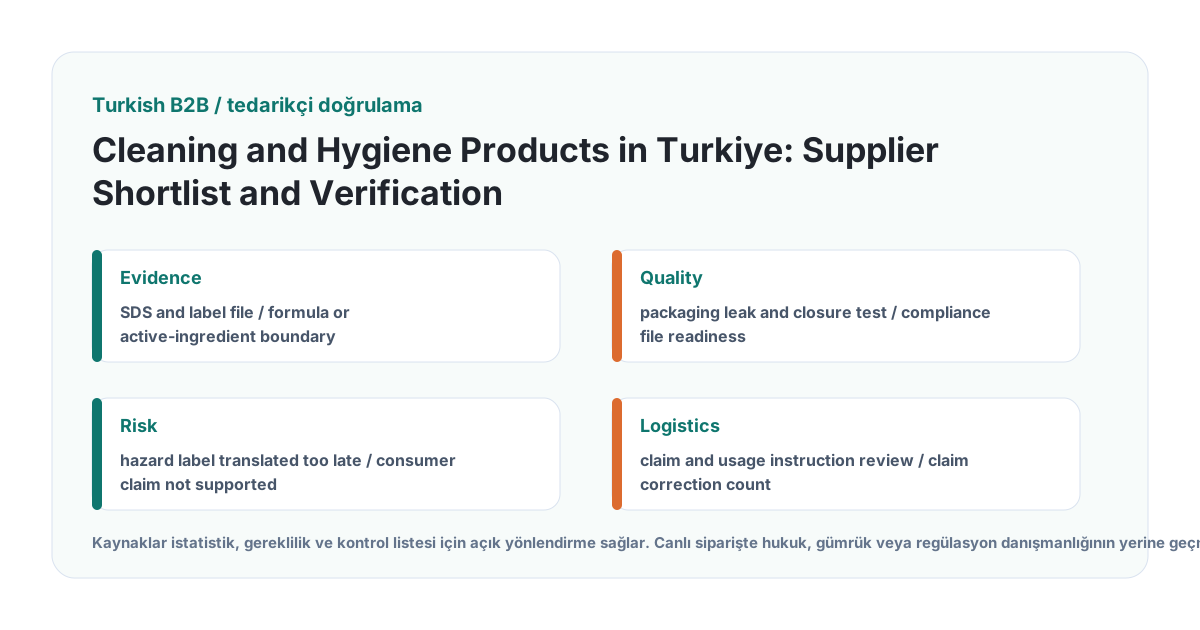
- SDS and label file
- formula or active-ingredient boundary
- packaging leak and closure test
- claim and usage instruction review
- SDS
- active-ingredient or formula boundary
- hazard label file
- closure and leak test
- usage dilution instruction
- technical data sheet
- formula or composition boundary
- batch record
Cleaning and Hygiene Products specific buyer notes
Use these checks to verify the quoted product, production process and shipment requirements before approving an order.
- SDS, hazard label, dilution instructions and claim boundaries should be finalized before packaging print.
- Leak and closure tests matter because transport failure can turn a good formula into an unusable shipment.
- Disinfectant or biocidal claims need market-specific verification before sales language is approved.
Factory, trader or mixed model?
Trading companies can be useful when they add category control, consolidation or export discipline. The problem is not the trader model; the problem is hidden responsibility. A buyer should know who produces, who inspects, who owns corrective action and who carries warranty or replacement obligations.
| Supplier model | Useful when | Verification question |
|---|---|---|
| Direct manufacturer | Best when the buyer needs private-label detergents or institutional cleaners with process evidence. | Can you name the production site, equipment or line, and share product-specific release records? |
| Exporter or trader | Useful for mixed baskets, smaller volumes or market entry when the exporter adds real control. | Which documents come from the factory, which from you, and who signs corrective action? |
| Contract manufacturer | Useful for private label, OEM development or product adaptation. | Who owns the formula, artwork, tooling and design, and which changes require written buyer approval? |
Verification questions to send before sampling
Verification should connect identity, capability and operating behavior. The buyer should know who owns the account, where production happens, which documents are current and what happens when a nonconformity appears.
- Which production site will make this order?
- Which documents can be shared before sampling?
- Which parameter is controlled during production rather than only at final inspection?
- What changes require written buyer approval?
Sample approval process
A sample is not a decoration; it is the first controlled object in the sourcing file. The buyer should define which sample is approved, which differences are accepted, which differences require re-sampling and who keeps the reference sample.
- golden sample retained by both sides
- sample deviation log before purchase order
- bulk-production approval tied to the same specification
- photographic evidence linked to lot, carton or serial reference
Compliance questions
Compliance should be practical and product-specific. A certificate that does not match the product, site, model, batch, formula or label may create false confidence. The shortlist should therefore ask how each candidate handles these controls:
- hazard communication
- biocidal or disinfectant claim boundary where relevant
- packaging leak resistance
- child-safety questions where applicable
- claim substantiation
- INCI or ingredient naming where relevant
- transport classification
- storage and shelf-life conditions
Shortlist email template
Hello, we are evaluating Cleaning and Hygiene Products suppliers in Turkiye for a B2B import program. Before price comparison, please confirm the production site, export experience for our target market, and whether you can share SDS, active-ingredient or formula boundary, hazard label file, closure and leak test. Please also explain how you control batch release review, stability or compatibility check, label and claims review. We will compare suppliers using the same evidence file and reply with a narrow RFQ for qualified candidates.
Red flags that should stop the shortlist
The following signals should not be normalized just because the supplier is responsive. A fast reply is useful; a fast reply without evidence is still weak.
- hazard label translated too late
- consumer claim not supported
- leakage and pallet risk ignored
- a disinfectant claim appears without the supporting regulatory route
- hazard labeling is translated after production
- leak testing is skipped because the sample looked fine
- only a catalog is shared when production evidence is requested
- the supplier avoids naming the production site
- price changes when documentation is requested
- sample approval has no written rule for bulk production
Supplier scorecard
Score each supplier using the same scale. A simple 1-5 score is enough if the buyer writes the reason behind each score. The shortlist should reward evidence quality, not volume of attachments.
| Score area | What a strong answer shows | What a weak answer looks like |
|---|---|---|
| Identity | Legal entity, production site, export contact and payment details reconcile. | The company changes names, sites or bank details without explanation. |
| Capability | private-label detergents, institutional cleaners, wipes are backed by product-specific evidence. | Catalog images are shared but no current records are available. |
| Quality | batch release review; stability or compatibility check; label and claims review are owned by a named person. | Inspection is described only as "we check everything." |
| Logistics | Incoterm and named place; carton and pallet specification; HS code and origin file are visible before purchase order. | Freight, origin, HS code or packing is postponed until after price agreement. |
Move from shortlist to RFQ
Use Cleaning and Hygiene Products in Turkiye: B2B Potential Map for the sector potential reading and Cleaning and Hygiene Products in Turkiye: RFQ, Quality and Logistics Plan to turn the approved shortlist into a controlled order file. If either page exposes missing evidence, the shortlist is not ready for commercial negotiation.
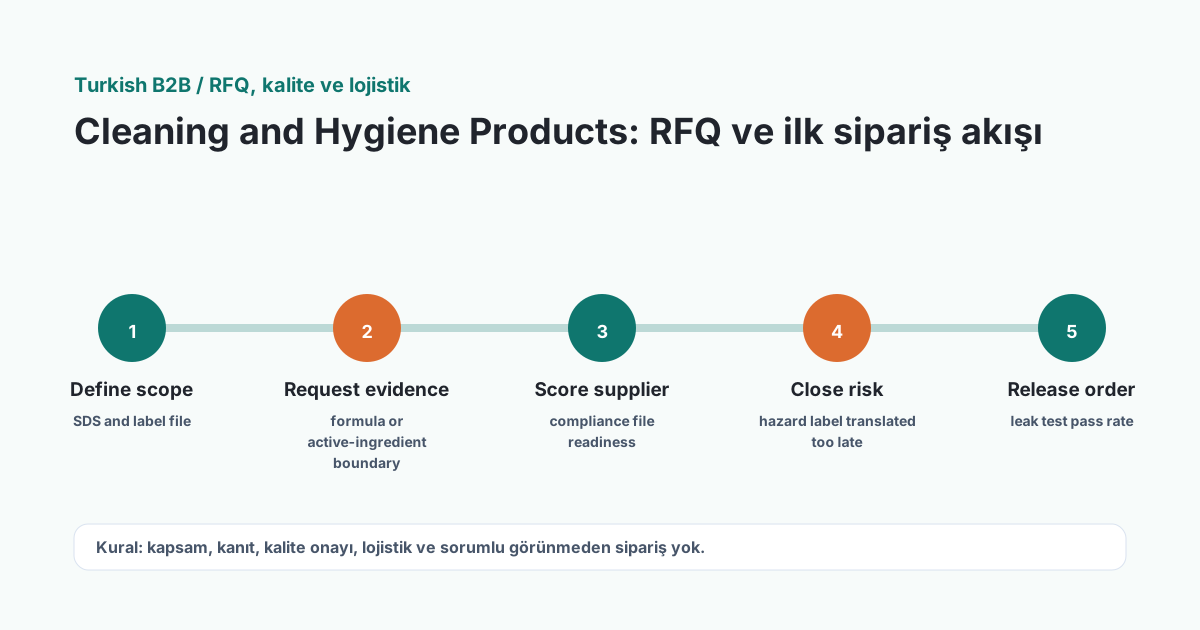
Buyer quality gate before action
Before using this Cleaning and Hygiene Products article as an RFQ or supplier file, check that every public-source note has been converted into a buyer decision, not copied as filler.
| Step | Evidence before price | Release rule |
|---|---|---|
| What buyers should define | Cleaning and Hygiene Products: private-label detergents; institutional cleaners; wipes; paper hygiene | Start with product family, destination market, volume band, required evidence, packaging, Incoterm, payment milestones and order-release rule before comparing prices. |
| Evidence before price | SDS and label file; formula or active-ingredient boundary; packaging leak and closure test; claim and usage instruction review; SDS | Request product-specific evidence: production site, specification, sample approval, quality records, packaging plan, export document example and corrective-action owner. |
| Buyer risks to control | hazard label translated too late; consumer claim not supported; leakage and pallet risk ignored; a disinfectant claim appears without the supporting regulatory route; hazard labeling is translated after production | Control vague specification, hidden production responsibility, sample-to-bulk drift, weak packaging, missing documents and unverified payment details. |
| RFQ and first-order workflow | For Cleaning and Hygiene Products, frame the first order as a controlled supplier verification pilot: start with private-label detergents, define release evidence, keep logistics assumptions visible and review compliance file readiness before repeat volume. | Rule: no order before scope, evidence, quality release, logistics and owner are visible. |
Cleaning and Hygiene Products supplier action
Use the guide as the buyer file, then request a shortlist or submit an RFQ with the evidence already defined: SDS and label file, formula or active-ingredient boundary, packaging leak and closure test.
FAQ
How many Cleaning and Hygiene Products suppliers should be shortlisted?
Three to five evidence-ready candidates are usually better than a long supplier list. Each candidate should answer the same document request so the buyer can compare capability, not presentation style.
How can a buyer tell whether a Turkish supplier is a manufacturer or trader?
Ask for the production site, document owner, quality-release owner and corrective-action owner. A trader can still be useful, but hidden responsibility creates risk.
What red flags matter in Cleaning and Hygiene Products sourcing?
Watch for hazard label translated too late, consumer claim not supported, leakage and pallet risk ignored, a disinfectant claim appears without the supporting regulatory route. These signals should trigger clarification before sampling or deposit.
What should be checked before sample approval?
The buyer should lock golden sample retained by both sides, sample deviation log before purchase order, bulk-production approval tied to the same specification, photographic evidence linked to lot, carton or serial reference so the approved sample can be converted into a production rule.
Related buyer paths across the network
Official and open sources
Cleaning and Hygiene Products in Turkiye: Supplier Shortlist and Verification is original. It does not copy competitor websites, closed market reports or supplier-directory prose. The sources below are used as official or open references for Cleaning and Hygiene Products interpretation and checklist design.
For the supplier verification angle, these links support national context, product-requirement thinking and verification workflow design. They do not replace buyer-side legal, customs or regulatory advice for a live Cleaning and Hygiene Products order.
- TurkStat - Small and Medium Sized Enterprises Statistics, 2024Official statistics used for SME production, employment and export framing.
- World Integrated Trade Solution - UN Comtrade accessOpen trade-data access point for HS-level import/export comparison.
- OSHA - Hazard CommunicationU.S. federal public information for SDS, hazard and label-control workflows.
- EPA - Safer ChoiceU.S. federal public information for cleaning-product and ingredient review concepts.
- TurkStat - External Trade Statistics by Enterprise Characteristics, 2024Official statistics used for exporter-size mix and buyer qualification logic.
- CISA - Supply Chain Risk ManagementU.S. federal public information for supply-chain risk controls.
- NIST Cyber Supply Chain Risk ManagementU.S. federal public information for supplier-risk and evidence-chain thinking.
- Republic of Turkiye Ministry of Trade - Foreign Trade Data Bulletin, December 2025Official public bulletin used for national goods-export and trade-volume context.
- World Bank Data Catalog - public licensesOpen-license reference for World Bank datasets, including CC BY style reuse where stated.
Related sector reading
- Cleaning and Hygiene Products in Turkiye: B2B Potential Map
- Cleaning and Hygiene Products in Turkiye: RFQ, Quality and Logistics Plan
- Cleaning and Hygiene Products: Supplier Regions, Chambers and Export Channels
- Cleaning and Hygiene Products Product Families: private-label detergents, institutional cleaners
- Cleaning and Hygiene Products in Turkiye: Import Compliance, HS Codes and Document Control
- Cleaning and Hygiene Products in Turkiye: Landed Cost, MOQ and Negotiation Playbook