建筑材料: 面向国际买家的 B2B 指南。
建筑材料: 进口合规、HS编码与文件控制: 在比较价格之前,先明确产品、目标市场、数量、证明文件、包装、Incoterm 和放行规则。
进口合规、HS编码与文件控制 focus: 在比较价格之前,先明确产品、目标市场、数量、证明文件、包装、Incoterm 和放行规则。
进口合规、HS编码与文件控制
For 建筑材料, import compliance starts before price ranking: product family, HS research, origin evidence, label rules, screening and document owner should be visible.
| 步骤 | 供应商证明 | 批准规则 |
|---|---|---|
| HS and customs research | 6907 style ceramic tiles where applicable; 6802 style worked stone where applicable | Use WITS, UN Comtrade and destination customs tools for research, then confirm classification with the importer, broker or qualified adviser. |
| Origin and export file | commercial invoice, packing list, origin evidence and transport document sample | Ask for sample documents with sensitive values removed before deposit or production release. |
| Product and label rules | fire, strength, insulation or durability requirement where applicable; installation instruction; site receiving rule | Translate public guidance into supplier questions; do not let a certificate name replace scope review. |
| Restricted-party and responsibility check | legal entity confirmation, bank-detail verification and screening workflow | Screen the contracting party, payment route and named intermediaries before payment milestones. |
| Shipment and receiving documents | Incoterm and named place; carton and pallet specification; HS code and origin file; insurance and warehouse receiving rule | Make the document owner visible so shipment delays do not become an after-the-fact blame exercise. |
供应商证明
HS examples are research starting points, not final customs decisions. Validate final classification with the importer, broker or qualified owner.
- 6907 style ceramic tiles where applicable
- 6802 style worked stone where applicable
- 3925 or 7610 style building components where applicable
- HS chapters should be checked in WITS, UN Comtrade or destination customs tools before shipment
- classification should be validated by the importer or broker, not guessed from a supplier catalog
- fire, strength, insulation or durability requirement where applicable
- installation instruction
- site receiving rule
- substitution approval
- destination building standards
买家风险
控制规格不清、责任隐藏、样品与量产偏差、包装薄弱、文件不完整和付款信息未核实等风险。 Hold the file when origin, document scope, payment identity or restricted-party screening is unclear.
| 步骤 | 供应商证明 | RFQ 与首单 |
|---|---|---|
| Proceed | standard and test report scope; project quantity and delivery phasing; pallet and handling plan; replacement and breakage rule | The supplier can connect the exact product, site, document owner and destination market. |
| Clarify | fire, strength, insulation or durability requirement where applicable; installation instruction; site receiving rule; substitution approval | A useful claim exists, but scope, model, batch, label, HS code or responsible person is not yet clear. |
| Hold | standard named but scope not checked; container mix causes site delays; damage responsibility unclear; the standard is named but the tested product is different | Do not rank price or pay deposit until the missing compliance point is closed. |
| Escalate | customs classification, regulated product route, sanctions/restricted-party signal or conflicting origin statement | Move the question to the importer, broker, legal adviser or qualified regulatory owner. |
RFQ 与首单: 进口合规、HS编码与文件控制
把首单作为受控试单;只有在文件、收货和纠正措施复核后再放大数量。 在比较价格之前,先明确产品、目标市场、数量、证明文件、包装、Incoterm 和放行规则。
| 步骤 | 供应商证明 | 批准规则 |
|---|---|---|
| 供应商证明 | 建筑材料: tiles and sanitaryware; stone and marble; doors and profiles; insulation and boards | 在比较价格之前,先明确产品、目标市场、数量、证明文件、包装、Incoterm 和放行规则。 |
| 供应商证明 | standard and test report scope; project quantity and delivery phasing; pallet and handling plan; replacement and breakage rule; standard scope map | 要求生产地点、产品规格、样品批准、质量记录、包装计划和出口文件示例。 |
| 买家风险 | standard named but scope not checked; container mix causes site delays; damage responsibility unclear; the standard is named but the tested product is different; mixed containers are planned without site sequence | 控制规格不清、责任隐藏、样品与量产偏差、包装薄弱、文件不完整和付款信息未核实等风险。 |
| RFQ 与首单 | 建筑材料: 把首单作为受控试单;只有在文件、收货和纠正措施复核后再放大数量。 tiles and sanitaryware; 把首单作为受控试单;只有在文件、收货和纠正措施复核后再放大数量。 | 把首单作为受控试单;只有在文件、收货和纠正措施复核后再放大数量。 |
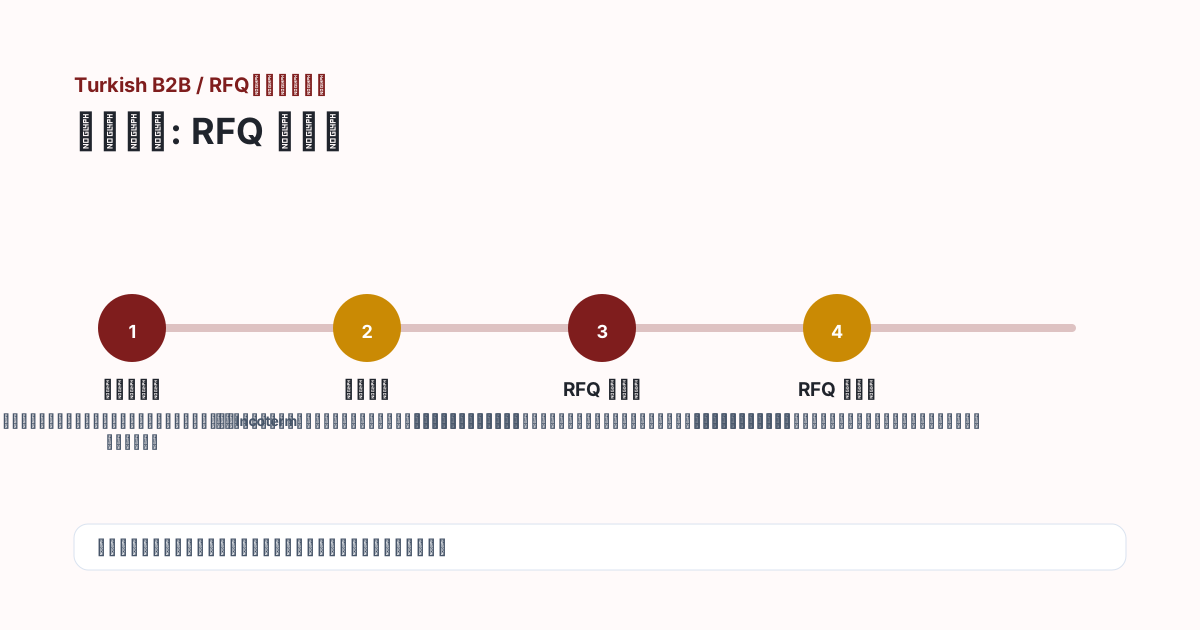
建筑材料 供应商行动
将本指南作为买家文件使用,然后用已定义的证据申请供应商候选名单或提交 RFQ:供应商证明。
FAQ
供应商证明
要求生产地点、产品规格、样品批准、质量记录、包装计划和出口文件示例。
买家风险
控制规格不清、责任隐藏、样品与量产偏差、包装薄弱、文件不完整和付款信息未核实等风险。
RFQ 与首单
把首单作为受控试单;只有在文件、收货和纠正措施复核后再放大数量。
Editorial quality checklist for 建筑材料
建筑材料: 进口合规、HS编码与文件控制: 建筑材料 should be used as a working decision file, not only as a reading page. The practical check is whether a buyer can leave the article with a clear scope, required evidence, supplier questions, risk owner and next action for 建筑材料.
For stronger SEO and buyer usefulness, this page now connects the topic to proof, implementation and related sourcing paths. That reduces thin-content risk and helps the reader move from general research to a verifiable supplier or operating decision.
- Define the decision: write product or service scope, target market, expected volume, approval owner and the date of the next review.
- Ask for current evidence: request documents that match this exact product, service, batch, process or customer scenario.
- Compare complete answers: score response quality, missing data, correction speed and commercial assumptions before comparing price.
- Keep the first order controlled: connect sample approval, release criteria, logistics, payment terms and corrective action in one note.
| Review area | Quality question |
|---|---|
| Scope | Product, market, volume, owner and release rule are written before supplier comparison. |
| Evidence | Specification, sample, quality record, certificate, label or service proof is checked for date and relevance. |
| Decision | The buyer records what can be approved now, what is blocked and who owns the next correction. |
FAQ for this article
What should be checked first for 建筑材料?
Start with the decision file: scope, evidence, acceptance criteria, delivery assumptions and the person who can approve or stop the next step.
How does this article support supplier or partner selection?
It turns the topic into a checklist of records, questions and comparison rules, so the reader can separate a strong answer from a generic sales reply.
When should the reader move to a related guide?
Move to a related guide when the next risk is outside the current page, such as supplier discovery, contract manufacturing, food safety, logistics or company verification.
Useful cross-site next reads
官方和开放来源
在比较价格之前,先明确产品、目标市场、数量、证明文件、包装、Incoterm 和放行规则。
在比较价格之前,先明确产品、目标市场、数量、证明文件、包装、Incoterm 和放行规则。
- World Bank Enterprise Surveys在比较价格之前,先明确产品、目标市场、数量、证明文件、包装、Incoterm 和放行规则。
- TurkStat - Annual Industry and Service Statistics, 2024在比较价格之前,先明确产品、目标市场、数量、证明文件、包装、Incoterm 和放行规则。
- GOV.UK - Product safety advice for businesses在比较价格之前,先明确产品、目标市场、数量、证明文件、包装、Incoterm 和放行规则。
- World Bank Logistics Performance Index在比较价格之前,先明确产品、目标市场、数量、证明文件、包装、Incoterm 和放行规则。
- Republic of Turkiye Ministry of Trade - list of organized industrial zones在比较价格之前,先明确产品、目标市场、数量、证明文件、包装、Incoterm 和放行规则。
- Invest in Turkiye - investment zones在比较价格之前,先明确产品、目标市场、数量、证明文件、包装、Incoterm 和放行规则。
- Aegean Exporters Associations在比较价格之前,先明确产品、目标市场、数量、证明文件、包装、Incoterm 和放行规则。
- Turkiye Exporters Assembly - export figures and exporter association context在比较价格之前,先明确产品、目标市场、数量、证明文件、包装、Incoterm 和放行规则。
- European Commission - Access2Markets在比较价格之前,先明确产品、目标市场、数量、证明文件、包装、Incoterm 和放行规则。