物流・倉庫・コールドチェーン: 国際バイヤー向けB2Bガイド。
物流・倉庫・コールドチェーン: 製品群、基準、バイヤーリスク: 価格比較の前に、製品、対象市場、数量、証拠書類、梱包、Incoterm、承認ルールを定義します。
製品群、基準、バイヤーリスク focus: 価格比較の前に、製品、対象市場、数量、証拠書類、梱包、Incoterm、承認ルールを定義します。
製品群、基準、バイヤーリスク
生産拠点、仕様、サンプル承認、品質記録、梱包計画、輸出書類例を確認します。 For 物流・倉庫・コールドチェーン, broad category searches should be split into product families before RFQ.
| サプライヤー証拠 | サプライヤー証拠 | 製品群、基準、バイヤーリスク | バイヤーリスク |
|---|---|---|---|
| freight coordination | Incoterm and responsibility matrix | HS and origin review | freight responsibility agreed verbally |
| warehouse handoff | customs and origin file | cold-chain record retention | HS classification fixed after shipment |
| cold-chain routes | temperature and release rule | sanctions screening | temperature records not tied to release decision |
| customs file preparation | warehouse receiving specification | insurance and claim process | freight cost is quoted without named place |
| shipment exception control | Incoterm responsibility matrix | HS classification | temperature records are collected but not used for release decisions |
サプライヤー証拠
生産拠点、仕様、サンプル承認、品質記録、梱包計画、輸出書類例を確認します。 Claims should be connected to model, batch, lot, drawing, formula, label, carton or shipment scope.
- Incoterm responsibility matrix
- customs data checklist
- temperature release rule
- warehouse receiving specification
- exception escalation contact
- Incoterm matrix
- packing list
- origin file
- HS and origin review
- cold-chain record retention
- sanctions screening
- insurance and claim process
バイヤーリスク
曖昧な仕様、責任の不透明さ、サンプルと量産の差、弱い梱包、不完全な書類、未確認の支払情報を管理します。 A first order should test the highest-risk proof points, not every possible SKU.
- freight responsibility agreed verbally
- HS classification fixed after shipment
- temperature records not tied to release decision
- freight cost is quoted without named place
- temperature records are collected but not used for release decisions
- HS code is decided after shipment
- only a catalog is shared when production evidence is requested
- the supplier avoids naming the production site
- price changes when documentation is requested
- sample approval has no written rule for bulk production
RFQと初回注文: 製品群、基準、バイヤーリスク
初回注文は管理されたパイロットとして扱い、書類、受入、是正措置を確認してから拡大します。 価格比較の前に、製品、対象市場、数量、証拠書類、梱包、Incoterm、承認ルールを定義します。
| 手順 | サプライヤー証拠 | 承認ルール |
|---|---|---|
| サプライヤー証拠 | 物流・倉庫・コールドチェーン: freight coordination; warehouse handoff; cold-chain routes; customs file preparation | 価格比較の前に、製品、対象市場、数量、証拠書類、梱包、Incoterm、承認ルールを定義します。 |
| サプライヤー証拠 | Incoterm and responsibility matrix; customs and origin file; temperature and release rule; warehouse receiving specification; Incoterm responsibility matrix | 生産拠点、仕様、サンプル承認、品質記録、梱包計画、輸出書類例を確認します。 |
| バイヤーリスク | freight responsibility agreed verbally; HS classification fixed after shipment; temperature records not tied to release decision; freight cost is quoted without named place; temperature records are collected but not used for release decisions | 曖昧な仕様、責任の不透明さ、サンプルと量産の差、弱い梱包、不完全な書類、未確認の支払情報を管理します。 |
| RFQと初回注文 | 物流・倉庫・コールドチェーン: 初回注文は管理されたパイロットとして扱い、書類、受入、是正措置を確認してから拡大します。 freight coordination; 初回注文は管理されたパイロットとして扱い、書類、受入、是正措置を確認してから拡大します。 | 初回注文は管理されたパイロットとして扱い、書類、受入、是正措置を確認してから拡大します。 |
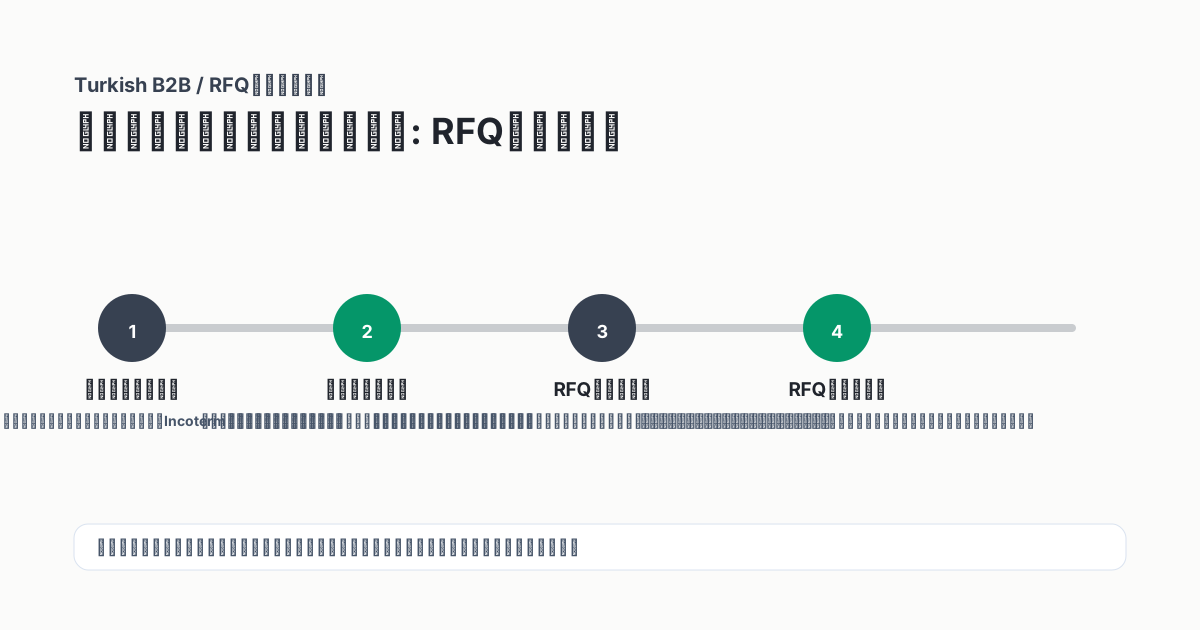
物流・倉庫・コールドチェーン サプライヤーアクション
このガイドをバイヤーファイルとして使い、定義済みの証拠でサプライヤー候補リスト依頼またはRFQ送信を行います: サプライヤー証拠.
FAQ
サプライヤー証拠
生産拠点、仕様、サンプル承認、品質記録、梱包計画、輸出書類例を確認します。
バイヤーリスク
曖昧な仕様、責任の不透明さ、サンプルと量産の差、弱い梱包、不完全な書類、未確認の支払情報を管理します。
RFQと初回注文
初回注文は管理されたパイロットとして扱い、書類、受入、是正措置を確認してから拡大します。
Editorial quality checklist for 物流・倉庫・コールドチェーン
物流・倉庫・コールドチェーン: 製品群、基準、バイヤーリスク should be used as a working decision file, not only as a reading page. The practical check is whether a buyer can leave the article with a clear scope, required evidence, supplier questions, risk owner and next action for 物流・倉庫・コールドチェーン.
For stronger SEO and buyer usefulness, this page now connects the topic to proof, implementation and related sourcing paths. That reduces thin-content risk and helps the reader move from general research to a verifiable supplier or operating decision.
- Define the decision: write product or service scope, target market, expected volume, approval owner and the date of the next review.
- Ask for current evidence: request documents that match this exact product, service, batch, process or customer scenario.
- Compare complete answers: score response quality, missing data, correction speed and commercial assumptions before comparing price.
- Keep the first order controlled: connect sample approval, release criteria, logistics, payment terms and corrective action in one note.
| Review area | Quality question |
|---|---|
| Scope | Product, market, volume, owner and release rule are written before supplier comparison. |
| Evidence | Specification, sample, quality record, certificate, label or service proof is checked for date and relevance. |
| Decision | The buyer records what can be approved now, what is blocked and who owns the next correction. |
FAQ for this article
What should be checked first for 物流・倉庫・コールドチェーン?
Start with the decision file: scope, evidence, acceptance criteria, delivery assumptions and the person who can approve or stop the next step.
How does this article support supplier or partner selection?
It turns the topic into a checklist of records, questions and comparison rules, so the reader can separate a strong answer from a generic sales reply.
When should the reader move to a related guide?
Move to a related guide when the next risk is outside the current page, such as supplier discovery, contract manufacturing, food safety, logistics or company verification.
Useful cross-site next reads
公式・オープンソース
価格比較の前に、製品、対象市場、数量、証拠書類、梱包、Incoterm、承認ルールを定義します。
価格比較の前に、製品、対象市場、数量、証拠書類、梱包、Incoterm、承認ルールを定義します。
- GOV.UK - Import, export and customs価格比較の前に、製品、対象市場、数量、証拠書類、梱包、Incoterm、承認ルールを定義します。
- FDA - Food Safety Modernization Act価格比較の前に、製品、対象市場、数量、証拠書類、梱包、Incoterm、承認ルールを定義します。
- Republic of Turkiye Ministry of Trade - Foreign Trade Data Bulletin, December 2025価格比較の前に、製品、対象市場、数量、証拠書類、梱包、Incoterm、承認ルールを定義します。
- International Trade Administration - Consolidated Screening List価格比較の前に、製品、対象市場、数量、証拠書類、梱包、Incoterm、承認ルールを定義します。
- Istanbul Metropolitan Municipality - Open Data Portal価格比較の前に、製品、対象市場、数量、証拠書類、梱包、Incoterm、承認ルールを定義します。
- Izmir Metropolitan Municipality - Open Data Portal価格比較の前に、製品、対象市場、数量、証拠書類、梱包、Incoterm、承認ルールを定義します。
- UNCTAD - Transport and trade facilitation価格比較の前に、製品、対象市場、数量、証拠書類、梱包、Incoterm、承認ルールを定義します。
- Turkiye Exporters Assembly - export figures and exporter association context価格比較の前に、製品、対象市場、数量、証拠書類、梱包、Incoterm、承認ルールを定義します。
- Central Bank of the Republic of Turkiye - manufacturing capacity utilization価格比較の前に、製品、対象市場、数量、証拠書類、梱包、Incoterm、承認ルールを定義します。