Diese übersetzte Analyse beschreibt TR2B als Türkei-fokussierten B2B-Arbeitsraum, nicht als passives Firmenverzeichnis. Die Plattform verbindet Produkte, Services, Firmenprofile, Anfragen, Angebote, professionelle Kontakte, Markenanzeigen und Handelswerkzeuge in einem gemeinsamen geschäftlichen Kontext.
Der praktische Wert liegt in der Ordnung. Einkäufer kommen von der Suche zur Shortlist, Anbieter bauen eine bessere digitale Vitrine auf, internationale Nutzer entdecken türkische Unternehmen ohne eigenes Firmenprofil außerhalb der Türkei, und Angebotsteams vergleichen Konditionen strukturierter.
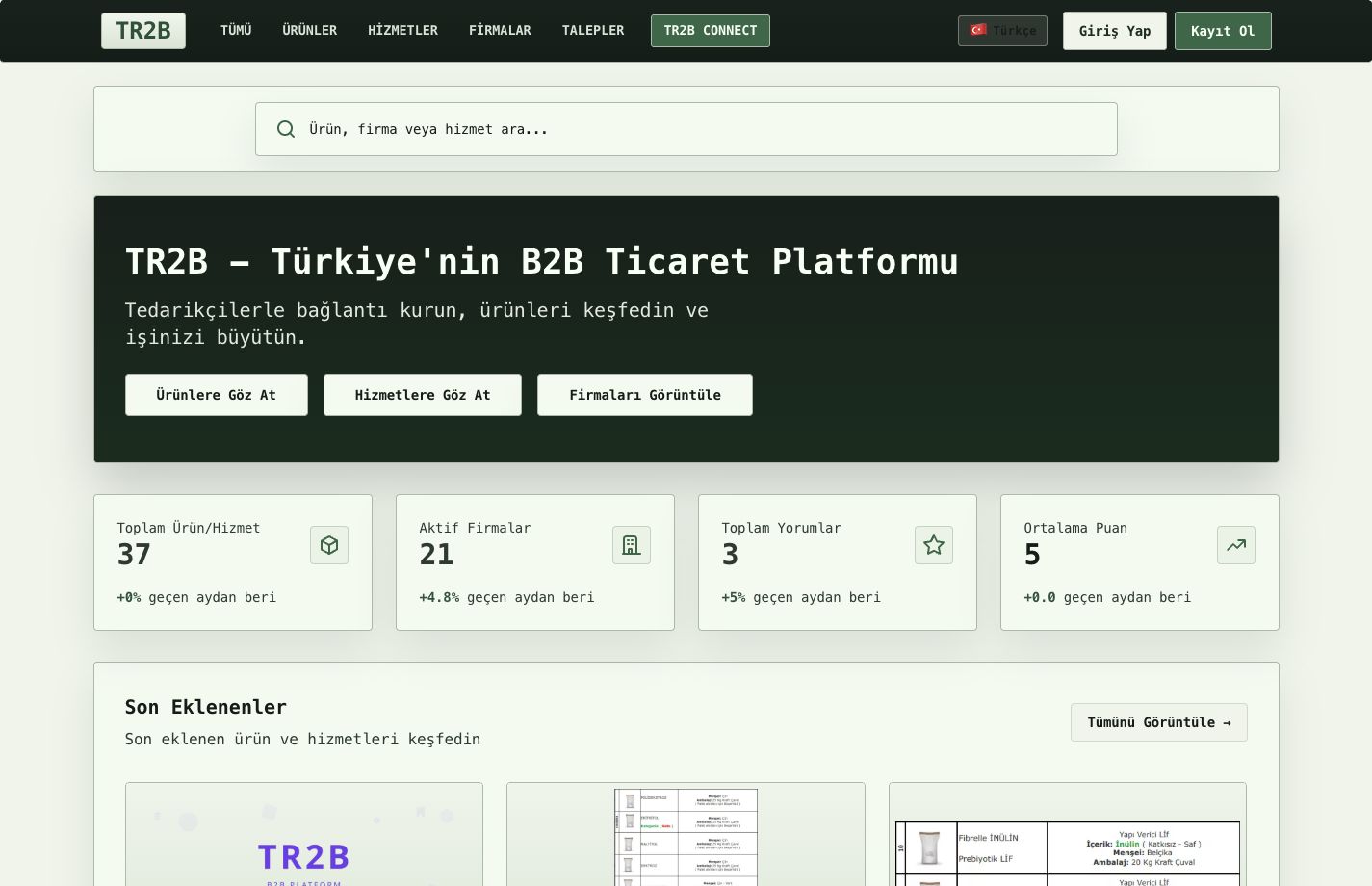
Plattformstruktur
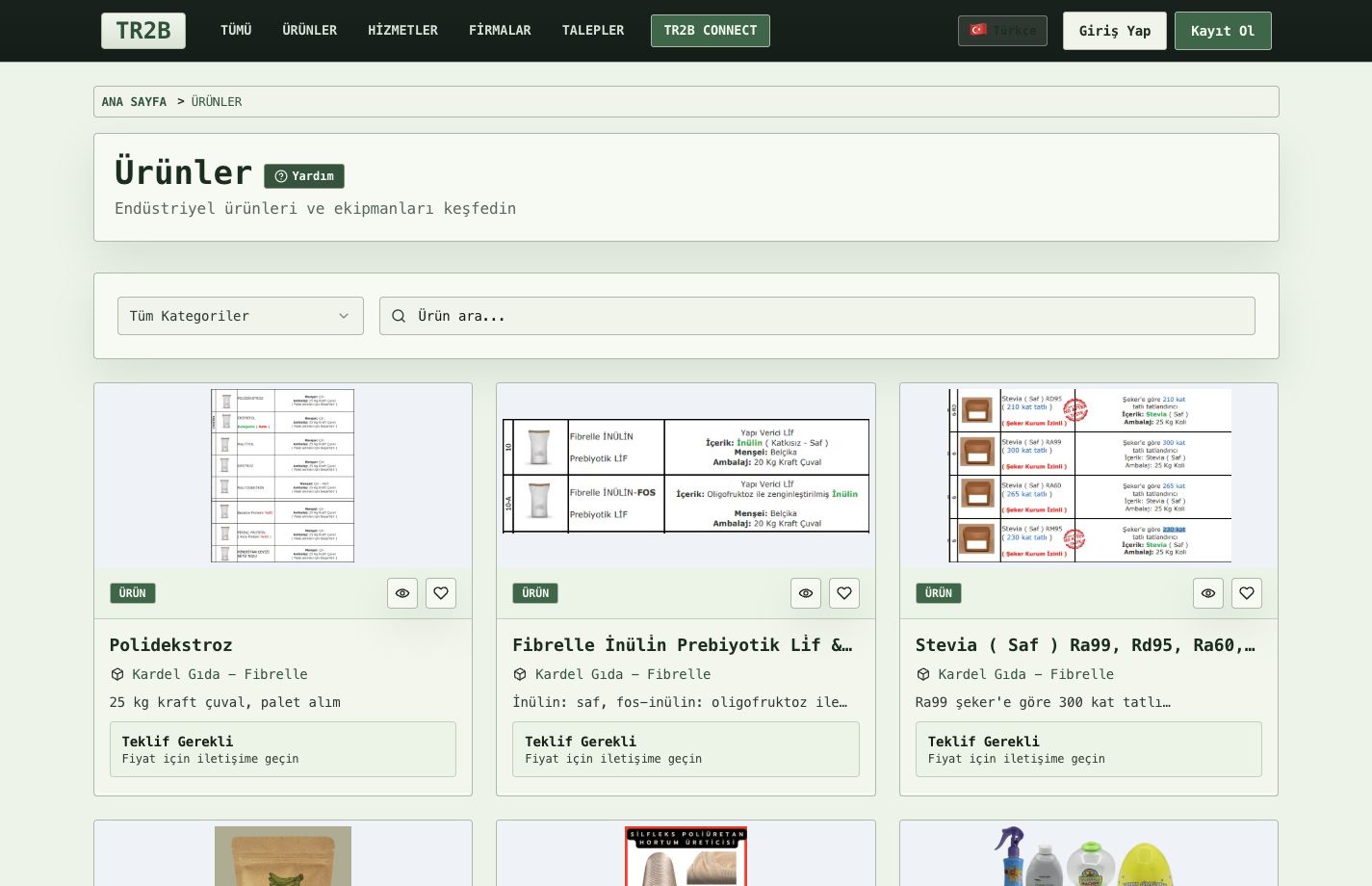
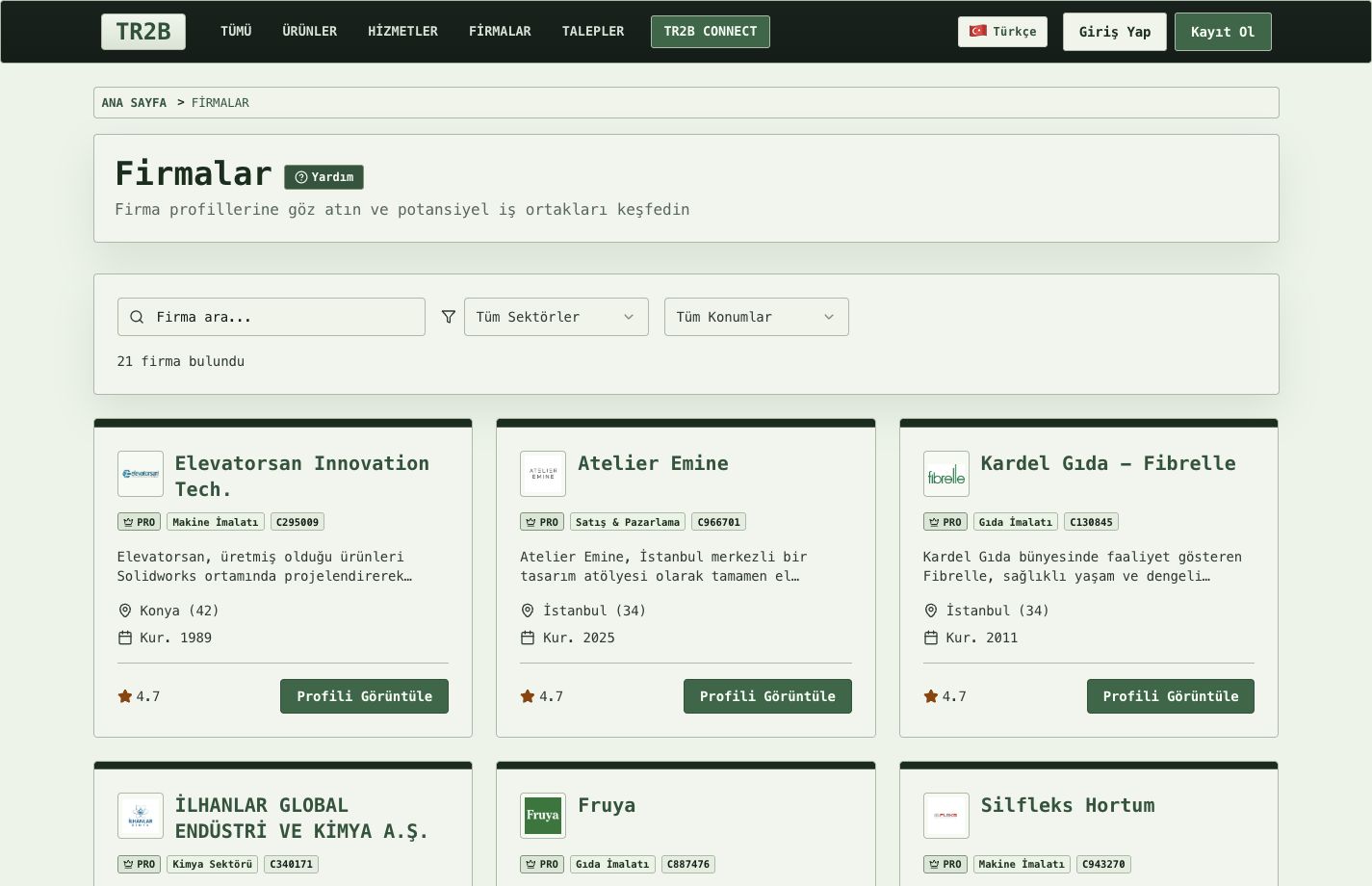
Produktseiten zeigen, was gekauft werden kann; Serviceseiten zeigen, welche Leistung oder Fertigung möglich ist; Firmenprofile zeigen, wer hinter dem Angebot steht; Anfrage- und Angebotsfunktionen bringen die Suche in kommerzielle Bedingungen. Connect, Brand Market, HSBot und LEXAI ergänzen Personen-, Marken- und Compliance-Ebene.
| TR2B layer | What it does | Why it matters in B2B |
|---|---|---|
| Products | Shows product listings, descriptions, price or quote signals and the related company in one flow. | The buyer can evaluate the product and supplier context before asking for price. |
| Services | Makes contract manufacturing, private label, project production, R&D and technical services visible. | Turkey sourcing is not only stock product discovery; it is also production and service capacity discovery. |
| Companies | Company profiles collect sector, description, contact, website, review and product/service links. | The buyer can read business identity before moving to RFQ. |
| Requests and offers | Turns buyer need into a request and supplier response into price, lead time, payment and notes. | Commercial comparison becomes more structured than scattered email messages. |
| TR2B Connect | Makes professionals, expertise and cooperation goals visible behind company pages. | B2B trust often depends on reaching the right person, not only the right catalog item. |
| Brand Market | Creates a space for registered brand listings, documents and brand-related offers. | Brand assets, private label and portfolio development become part of the B2B marketplace. |
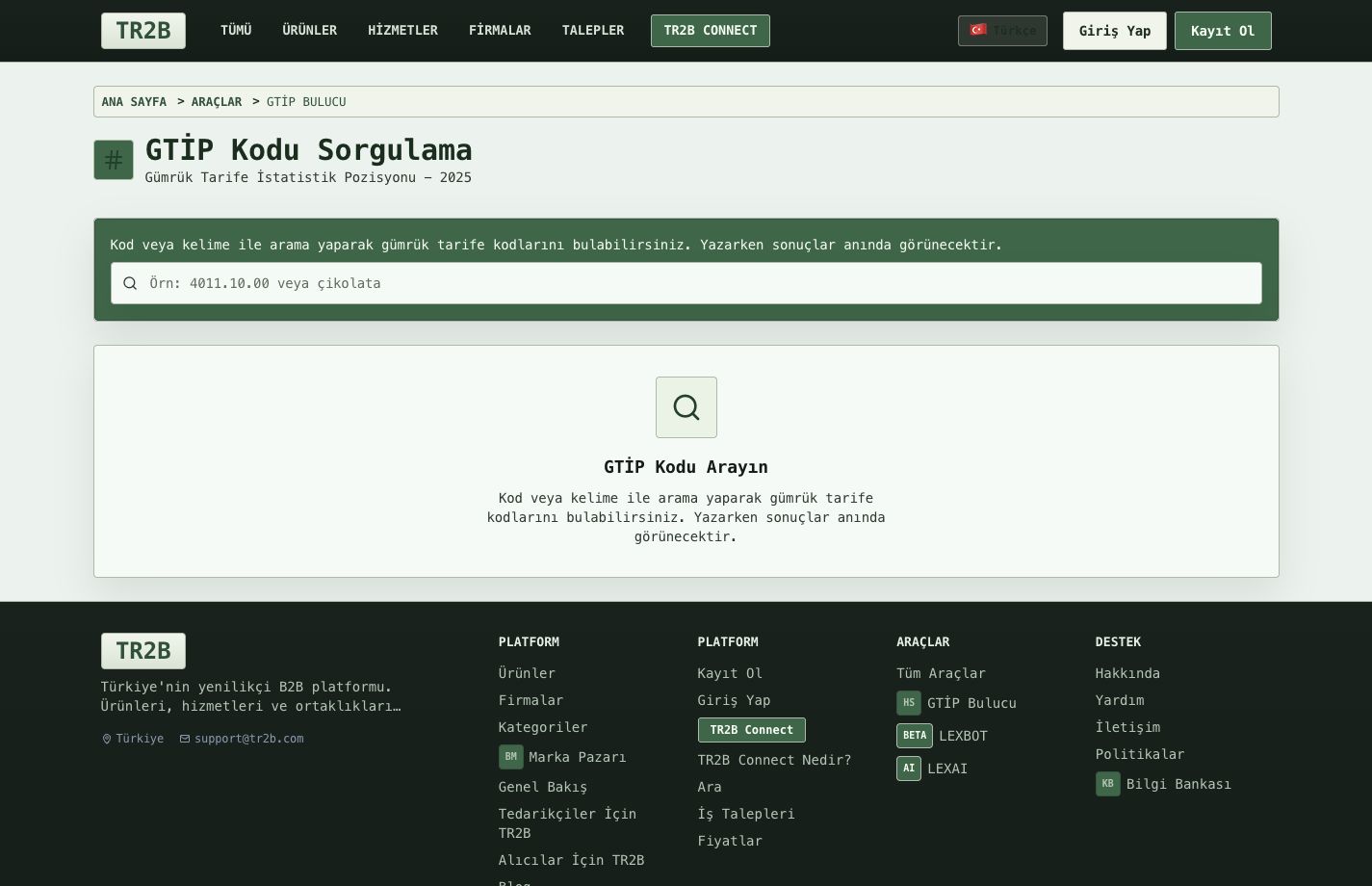
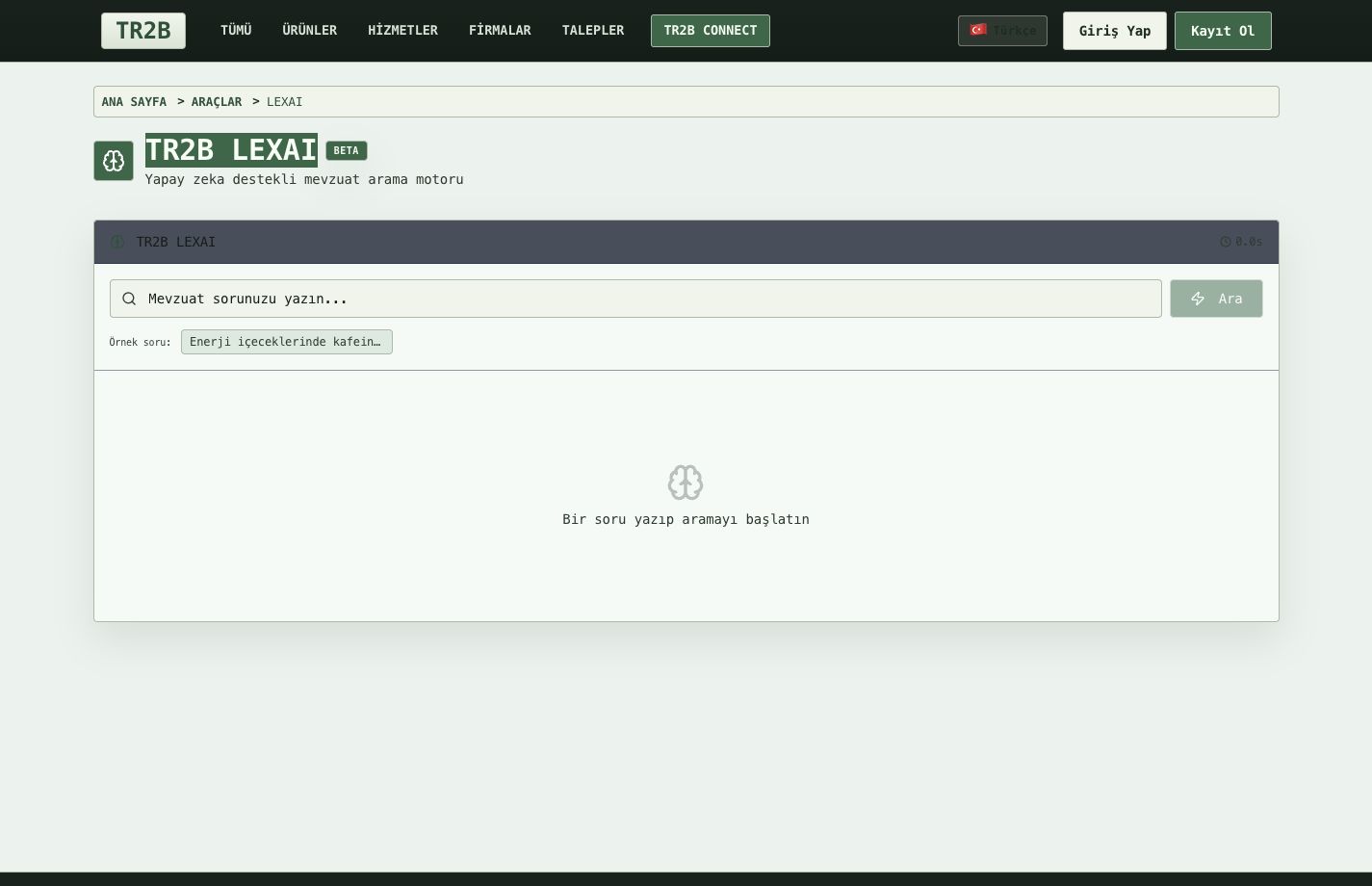
| HSBot and LEXAI | Supports HS/GTIP code research and regulation-oriented search. | Classification and compliance questions can be raised before the first order. |
Für Einkäufer, Anbieter und internationale Nutzer
Einkäufer können suchen, speichern, kontaktieren und Angebote anfordern. Anbieter präsentieren Firmenseiten, Produkt- und Serviceeinträge, Medien, Dokumente und Kategorien. Internationale Nutzer können türkische Lieferanten durchsuchen, Anfragen eröffnen, Unternehmen kontaktieren, Connect-Profile erstellen und Werkzeuge wie HSBot nutzen.
Angebote, Connect, Brand Market und Werkzeuge
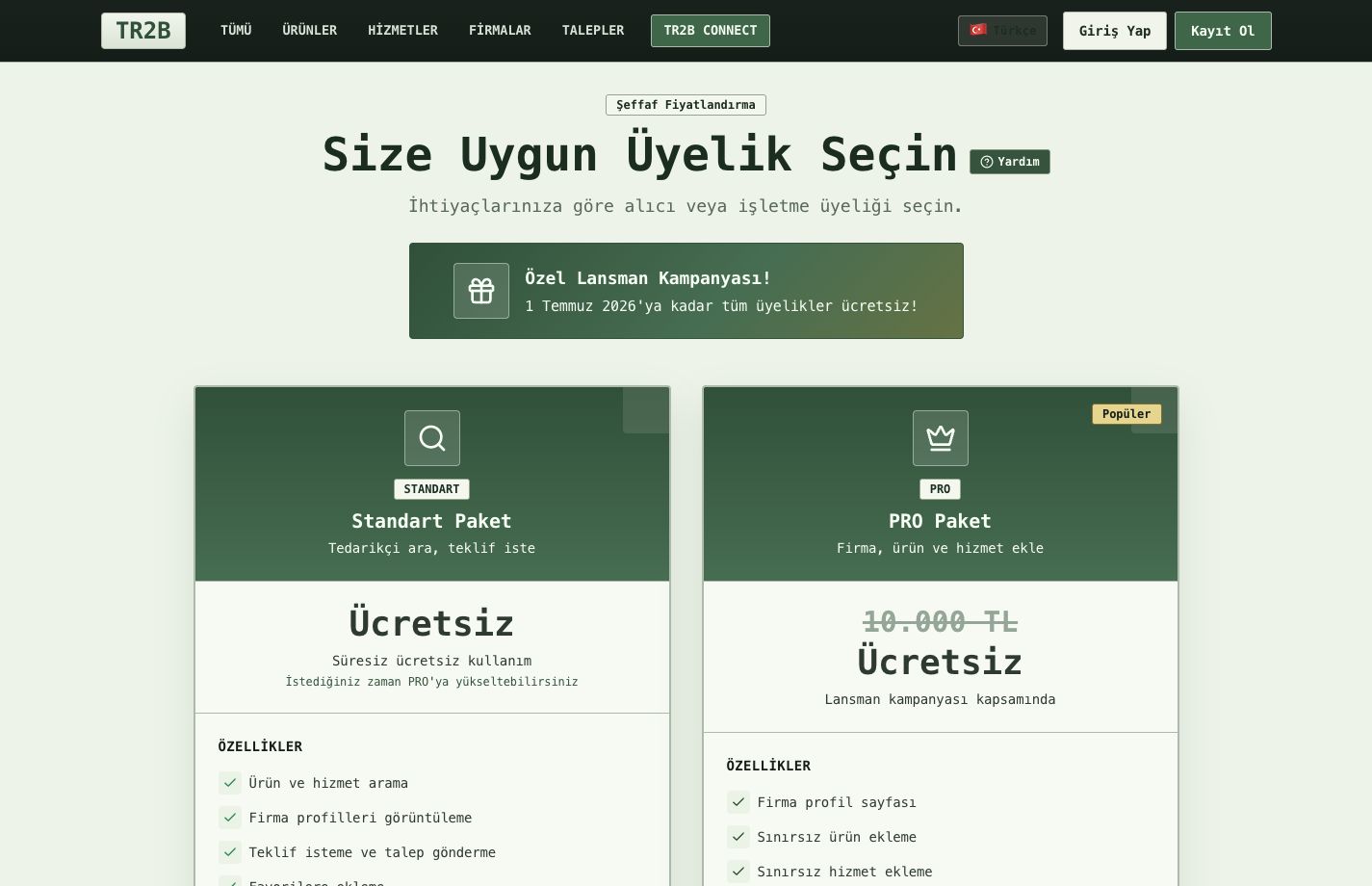
Der Angebotsprozess funktioniert am besten mit klarer Menge, Zielmarkt, technischen Anforderungen, Liefererwartung und Zahlungsannahmen. Anbieter sollten Preis, Lieferzeit, Zahlungsbedingungen, Dokumente und praktische Hinweise nennen. Connect macht Ansprechpartner sichtbar; Brand Market unterstützt Markenchancen; HSBot und LEXAI verbessern Klassifizierungs- und Regulierungsfragen.
Fazit
TR2B ist am stärksten, wenn es als Sourcing-Datei genutzt wird: entdecken, filtern, kontaktieren, anfragen, vergleichen und das erste Geschäftsgespräch mit türkischen Lieferanten vorbereiten.
Editorial quality checklist for Plattformanalyse
Türkiyes B2B-Handelsplattform: Plattformanalyse should be used as a working decision file, not only as a reading page. The practical check is whether a buyer can leave the article with a clear scope, required evidence, supplier questions, risk owner and next action for Plattformanalyse.
For stronger SEO and buyer usefulness, this page now connects the topic to proof, implementation and related sourcing paths. That reduces thin-content risk and helps the reader move from general research to a verifiable supplier or operating decision.
- Define the decision: write product or service scope, target market, expected volume, approval owner and the date of the next review.
- Ask for current evidence: request documents that match this exact product, service, batch, process or customer scenario.
- Compare complete answers: score response quality, missing data, correction speed and commercial assumptions before comparing price.
- Keep the first order controlled: connect sample approval, release criteria, logistics, payment terms and corrective action in one note.
| Review area | Quality question |
|---|---|
| Scope | Product, market, volume, owner and release rule are written before supplier comparison. |
| Evidence | Specification, sample, quality record, certificate, label or service proof is checked for date and relevance. |
| Decision | The buyer records what can be approved now, what is blocked and who owns the next correction. |
FAQ for this article
What should be checked first for Plattformanalyse?
Start with the decision file: scope, evidence, acceptance criteria, delivery assumptions and the person who can approve or stop the next step.
How does this article support supplier or partner selection?
It turns the topic into a checklist of records, questions and comparison rules, so the reader can separate a strong answer from a generic sales reply.
When should the reader move to a related guide?
Move to a related guide when the next risk is outside the current page, such as supplier discovery, contract manufacturing, food safety, logistics or company verification.
Useful cross-site next reads
Practical depth notes for Article
Türkiyes B2B-Handelsplattform now includes an additional decision layer for readers who need more than a short overview. The practical goal is to define the buyer file, the evidence request, the first review point and the next page to read inside the same topic cluster.
For Article, quality is strongest when the article answers four operating questions: what is being decided, which evidence proves it, what risk can stop the next step and who owns the correction. That structure helps the page serve both search intent and real buyer work.
Internal reading path
Source and verification notes
Use open and official references as orientation, then validate every live supplier, price, customs, legal or technical decision with current documents from the responsible party. Public sources support context; they do not replace buyer-side due diligence.
- World Bank open data and terms
- International Trade Administration public guidance
- European public data portal
Decision checklist
| Step | Evidence to keep | Stop rule |
|---|---|---|
| Scope | Product, service, market, quantity and owner | No comparison without same baseline |
| Evidence | Current record tied to the exact offer | Pause if proof is generic or outdated |
| Release | Approval note, delivery assumption and correction owner | Do not scale until first review is closed |